Why You’ll Love This Poached Egg
Picture starting your day with a simple yet delightful poached egg that’s easy to make and tastes great every time. This poached egg recipe stands out because it’s quick and straightforward, perfect for anyone with a busy schedule. In just a few minutes, you can have a healthy breakfast that’s packed with benefits.
- Ease of preparation: This recipe takes only about 8 minutes from start to finish, making it ideal for busy parents and working professionals who want a fast meal. With just a few basic steps, even beginners can create a poached egg without any fancy tools, and it’s one of the best ways to enjoy a poached egg without hassle. Its simplicity lets you focus on what matters most.
- Health benefits: A single poached egg offers about 65 calories and 5 grams of protein, helping you feel full and energized. It’s low in fat and packed with nutrients like vitamin A and iron, which support overall wellness for diet-conscious individuals and seniors. This makes the poached egg a smart choice for a balanced breakfast that aligns with healthy eating goals.
- Versatility: You can adapt this poached egg recipe to fit various dietary needs, such as adding it to salads for travelers or pairing it with veggies for food enthusiasts. It’s flexible enough for students and newlyweds to customize based on what’s in the kitchen. This adaptability turns a basic poached egg into something special for any occasion.
- Distinctive flavor: The runny yolk and firm whites give a poached egg its unique texture and taste, which feels fresh and satisfying. There’s something comforting about that perfect poach, especially when you use fresh eggs to get the best results. It’s a breakfast option that brings joy without overwhelming flavors, making it a foolproof poached egg recipe for everyone.
This poached egg breakfast recipe not only saves time but also adds a touch of elegance to your plate, appealing to baking enthusiasts looking for simple savory options. By incorporating the poached egg into your routine, you’ll discover how easy it is to make something nutritious and delicious. Overall, it’s a reliable choice that fits seamlessly into modern lifestyles.
Jump to:
- Why You’ll Love This Poached Egg
- Essential Ingredients for Poached Egg
- How to Prepare the Perfect Poached Egg: Step-by-Step Guide
- Gathering Your Tools and Ingredients
- Heating the Water
- Straining and Transferring the Egg
- Adding Vinegar and Creating the Vortex
- Cooking the Egg
- Removing and Serving the Egg
- Dietary Substitutions to Customize Your Poached Egg
- Adapting for Different Diets
- Seasonal and Preference-Based Variations
- Mastering Poached Egg: Advanced Tips and Variations
- Pro Cooking Techniques
- Flavor Variations
- Presentation Tips and Make-Ahead Options
- How to Store Poached Egg: Best Practices
- Refrigeration Guidelines
- Freezing and Reheating Options
- FAQs: Frequently Asked Questions About Poached Egg
- How long should I poach an egg for a runny yolk?
- Can I poach eggs ahead of time and reheat them later?
- Should I add vinegar or salt to poaching water?
- What’s the best way to add eggs to the water for poaching?
- How important is the freshness of eggs when poaching?
- Poached Egg
- Ingredients
- Instructions
- Last Step:
- Notes
- Nutrition
- Did you make this recipe?
Essential Ingredients for Poached Egg
Gathering the right ingredients is key to making a great poached egg. Below is a detailed list based on the recipe, with exact measurements and reasons why each one matters. This helps you understand how each item contributes to the final dish.
- 1 large egg – This is the main ingredient that provides the creamy texture and nutrition; using a fresh one ensures the whites hold together well for a neat shape.
- 1 to 2 tablespoons light-colored vinegar (optional) – Added to the water, this helps the egg whites set quickly and prevents spreading, though it won’t overpower the taste if used sparingly.
For special dietary options, consider these adjustments to make your poached egg more inclusive:
- Vegan: Skip the egg and use a plant-based substitute like tofu or a vegan egg alternative, which mimics the texture when poached in the same way.
- Gluten-free: This recipe is naturally gluten-free, so no changes are needed, but ensure your vinegar is from a gluten-free source if you’re sensitive.
- Low-calorie: Stick to just the egg and skip the vinegar to keep calories minimal, or pair it with low-cal veggies to enhance the meal without adding extras.
By using these ingredients, you’re set for a foolproof poached egg recipe that can be tweaked easily. Remember, the quality of your egg makes a big difference in the poached egg’s appearance and taste.
How to Prepare the Perfect Poached Egg: Step-by-Step Guide
Gathering Your Tools and Ingredients
Before you begin, make sure you have a large pot, a fine mesh sieve, a small bowl, and a ramekin ready. This setup helps streamline the process for a poached egg. Start by selecting fresh eggs, as they poach better and give you that ideal shape we’re aiming for in this poached egg breakfast recipe.
Heating the Water
Begin by filling a large pot with water and bringing it to a boil on the stove. Once it reaches a full boil, reduce the heat to low so the water is just simmering gently. This step is crucial for a poached egg to cook evenly without breaking apart, and it’s a simple way to ensure the texture turns out right for various dietary preferences.
Straining and Transferring the Egg
Crack the egg into a fine mesh sieve over a small bowl to let the thinner whites drain away, which helps in creating a cleaner poached egg. Then, carefully transfer the egg to a ramekin for easy pouring. If you’re adapting for a low-calorie option, this is where you might choose a smaller egg to adjust portions while maintaining the poached egg’s core appeal.
Adding Vinegar and Creating the Vortex
If you decide to use 1 to 2 tablespoons of light-colored vinegar, add it to the simmering water and stir to form a vortex in the center. This technique helps the egg whites wrap around the yolk neatly. For those exploring a foolproof poached egg recipe that’s vinegar-free, you can skip this, but it might affect how the egg holds its shape during cooking.
Cooking the Egg
Gently slide the egg from the ramekin into the center of the vortex. Let it cook for about 3 minutes for firm whites and a runny yolk, adjusting time based on preference. This method works well for busy parents or students who need a quick poached egg, and you can poach multiple eggs without the vortex if needed, ensuring even cooking for larger batches.
Removing and Serving the Egg
Use a slotted spoon to lift the egg out of the water, then pat it with a paper towel to remove excess moisture. Serve immediately for the best taste, or if preparing ahead, cool it in an ice water bath and refrigerate for up to 2 days. To reheat, submerge in hot water for 20-30 seconds, which keeps the poached egg’s texture intact for working professionals on the go.
This step-by-step guide for the poached egg ensures success every time, with timing like prep at 5 minutes and cooking at 3 minutes for a total of about 8 minutes. Here’s a table summarizing the nutritional info per poached egg to highlight its benefits:
| Nutrient | Amount |
|---|---|
| Calories | 65 kcal |
| Protein | 5 g |
| Fat | 4 g |
| Saturated Fat | 1 g |
| Cholesterol | 163 mg |
| Sodium | 62 mg |
| Potassium | 60 mg |
| Vitamin A | 240 IU |
| Calcium | 25 mg |
| Iron | 0.8 mg |
For more tips, check out this quick breakfast ideas guide on our site. Outlined here is the full directions based on the summary: Bring the water to a boil and reduce to low, strain and transfer the egg, add vinegar if desired, pour into the vortex, cook for 3 minutes, remove and serve or store as needed.

Dietary Substitutions to Customize Your Poached Egg
Adapting for Different Diets
Everyone has unique needs, so swapping ingredients in your poached egg recipe can make it work for you. For instance, if you’re vegan, replace the egg with a tofu alternative that poaches similarly. These changes keep the poached egg’s essence while fitting various lifestyles.
Seasonal and Preference-Based Variations
Try adding seasonal herbs or veggies to your poached egg for a fresh twist, especially for food enthusiasts. For those with restrictions, like gluten-free options, the base recipe already works, but you can enhance it with safe seasonings. This flexibility makes the poached egg breakfast recipe a favorite for travelers and busy families.
Mastering Poached Egg: Advanced Tips and Variations
Pro Cooking Techniques
To get the best results with your poached egg, always use a fine mesh sieve to strain the egg first, which reduces wispy edges. Stirring the water to create a vortex helps form a perfect shape, ideal for one egg at a time. For multiple eggs, skip the vortex to ensure even cooking without extra fuss.
Flavor Variations
Experiment with seasonings like herbs or a dash of spice to change up the poached egg’s taste, making it exciting for celebration planners. If you’re diet-conscious, try pairing it with greens for a lighter meal. These tweaks turn a simple poached egg into a versatile dish for any occasion.
Presentation Tips and Make-Ahead Options
For plating, use fresh garnishes to make your poached egg look appealing. If you’re preparing in advance, cool the eggs in ice water and refrigerate them for up to 2 days, then reheat in hot water. This method is great for working professionals who want to save time while keeping the poached egg’s texture just right.
I found that using fresh eggs makes all the difference it’s like a game-changer for that perfect poach every morning.
How to Store Poached Egg: Best Practices
Refrigeration Guidelines
Storing your poached egg properly keeps it fresh for short-term use. Place it in an airtight container in the fridge for up to 2 days to maintain quality. This approach works well for meal prep, ensuring you have a quick poached egg ready for breakfast.
Freezing and Reheating Options
For longer storage, freeze poached eggs in a sealed bag, though reheating might affect texture slightly. When reheating, use hot water for 20-30 seconds to restore warmth without overcooking. Always check for safety before eating to keep meals enjoyable and healthy.
Here’s a helpful link for advanced techniques: poached eggs guide from a trusted source.
FAQs: Frequently Asked Questions About Poached Egg
How long should I poach an egg for a runny yolk?
Can I poach eggs ahead of time and reheat them later?
Should I add vinegar or salt to poaching water?
What’s the best way to add eggs to the water for poaching?
How important is the freshness of eggs when poaching?

Poached Egg
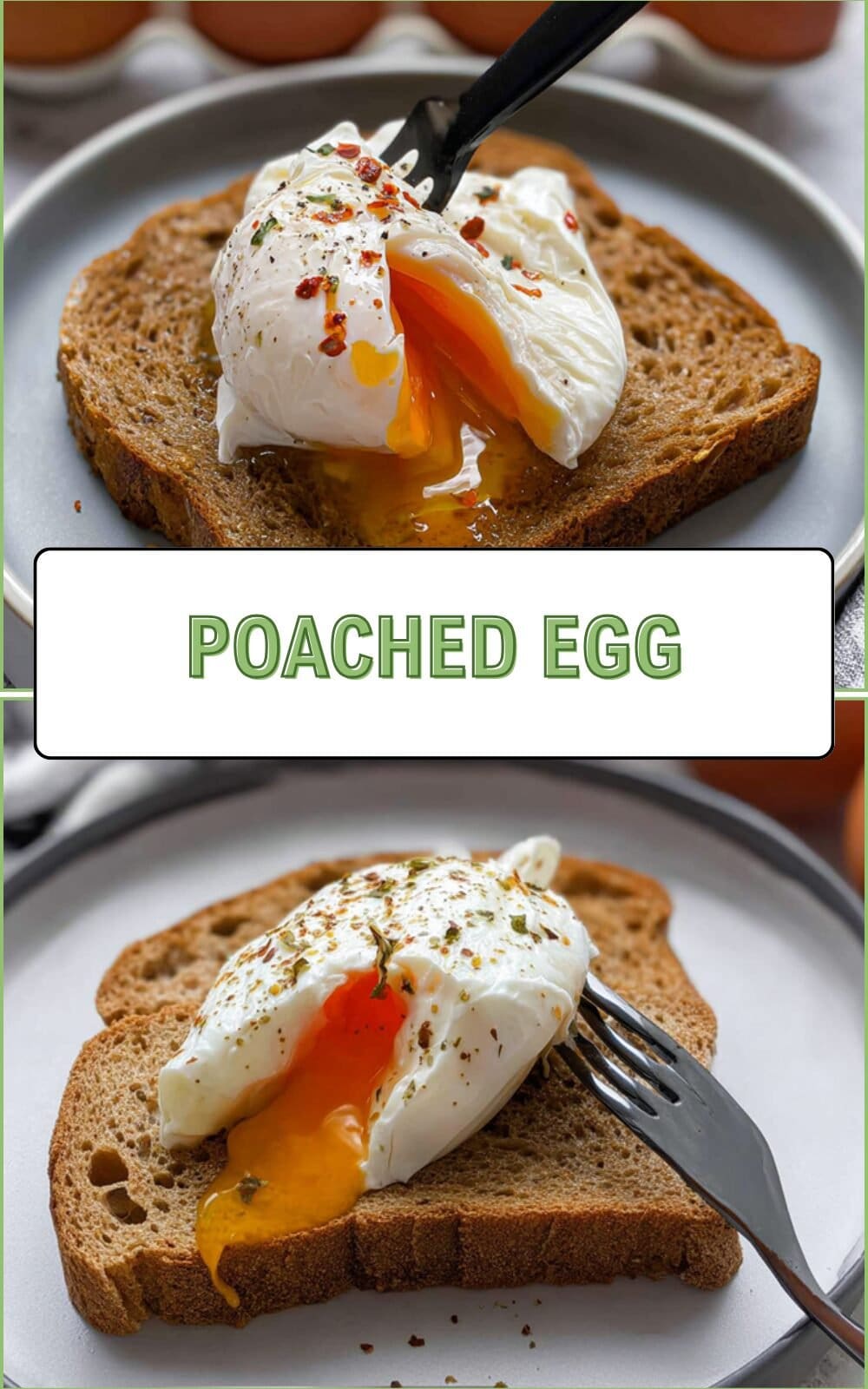
🥚 Poached Eggs: Foolproof Recipe for Breakfast gives you perfectly cooked eggs with tender whites and runny yolks every time.
🍽️ This simple recipe is ideal for a nutritious and elegant breakfast that’s quick to prepare and versatile with any meal.
- Total Time: 8 minutes
- Yield: 1 serving
Ingredients
– 1 large egg
– 1 to 2 tablespoons light-colored vinegar for helping the egg whites set quickly
Instructions
1-Gathering Your Tools and Ingredients: Before you begin, make sure you have a large pot, a fine mesh sieve, a small bowl, and a ramekin ready. This setup helps streamline the process for a poached egg. Start by selecting fresh eggs, as they poach better and give you that ideal shape we’re aiming for in this poached egg breakfast recipe.
2-Heating the Water: Begin by filling a large pot with water and bringing it to a boil on the stove. Once it reaches a full boil, reduce the heat to low so the water is just simmering gently. This step is crucial for a poached egg to cook evenly without breaking apart, and it’s a simple way to ensure the texture turns out right for various dietary preferences.
3-Straining and Transferring the Egg: Crack the egg into a fine mesh sieve over a small bowl to let the thinner whites drain away, which helps in creating a cleaner poached egg. Then, carefully transfer the egg to a ramekin for easy pouring. If you’re adapting for a low-calorie option, this is where you might choose a smaller egg to adjust portions while maintaining the poached egg’s core appeal.
4-Adding Vinegar and Creating the Vortex: If you decide to use 1 to 2 tablespoons of light-colored vinegar, add it to the simmering water and stir to form a vortex in the center. This technique helps the egg whites wrap around the yolk neatly. For those exploring a foolproof poached egg recipe that’s vinegar-free, you can skip this, but it might affect how the egg holds its shape during cooking.
5-Cooking the Egg: Gently slide the egg from the ramekin into the center of the vortex. Let it cook for about 3 minutes for firm whites and a runny yolk, adjusting time based on preference. This method works well for busy parents or students who need a quick poached egg, and you can poach multiple eggs without the vortex if needed, ensuring even cooking for larger batches.
6-Removing and Serving the Egg: Use a slotted spoon to lift the egg out of the water, then pat it with a paper towel to remove excess moisture. Serve immediately for the best taste, or if preparing ahead, cool it in an ice water bath and refrigerate for up to 2 days. To reheat, submerge in hot water for 20-30 seconds, which keeps the poached egg’s texture intact for working professionals on the go.
Last Step:
Please leave a rating and comment letting us know how you liked this recipe! This helps our business to thrive and continue providing free, high-quality recipes for you.Notes
🧺 Use a fine mesh sieve to remove wispy egg whites for a neater poach.
🌪️ Create a water vortex to help form a round shape for one egg at a time.
🥚 Always crack eggs into a ramekin first to avoid broken yolks or shells in water.
- Prep Time: 5 minutes
- Cook Time: 3 minutes
- Category: Breakfast
- Method: Poaching
Nutrition
- Serving Size: 1 poached egg
- Calories: 65
- Sodium: 62 mg
- Fat: 4 grams
- Saturated Fat: 1 gram
- Protein: 5 grams
- Cholesterol: 163 mg