Why You’ll Love This Sinigang
Ease of preparation
Sinigang is famous for being a one-pot Filipino sour soup, and this pork tamarind version stays approachable for home cooks. You start by simmering pork belly with onion and tomato, then you build the sour flavor by boiling young tamarind in water. After that, the vegetables go in stages so they stay vibrant and not mushy. Even busy parents can manage it because the biggest work is hands-off simmering.
Health benefits
This Sinigang recipe is loaded with vegetables like water spinach (kangkong), string beans, eggplant, okra, and optional daikon radish. The sour broth and tender pork provide protein, while the veggies contribute fiber and key micronutrients. For a nutrition angle, you can also read this external resource on pork nutrition basics to understand how lean and fattier cuts can fit into a balanced diet.
Versatility
Sinigang adapts well if you are cooking for different preferences. You can swap water spinach with spinach, bok choy, or pak choy, and you can use different chili peppers if siling pansigang is hard to find. If you want to control fat, choose a different pork cut like pork shoulder instead of pork belly. That flexibility makes this Filipino sour soup a go-to recipe for students, working professionals, and newlyweds building their recipe routine.
Distinctive flavor
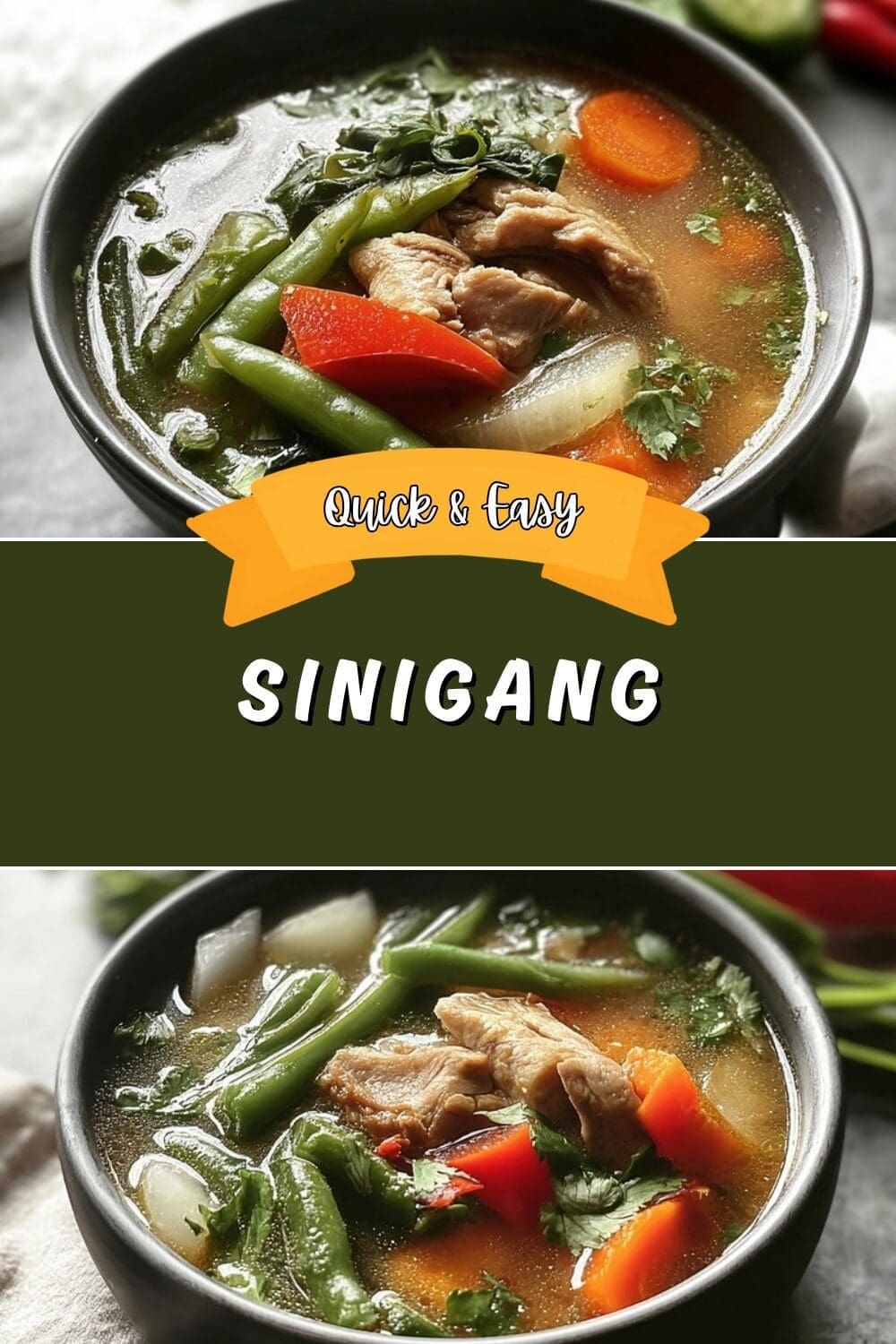
What makes Sinigang memorable is the tangy, sour broth that tastes bright without being harsh. Young tamarind gives the traditional sour flavor, and you can even combine it with ripe tamarind if you want a slightly rounder taste.
When the vegetables hit the pot, the broth becomes the perfect base for a spoonful of rice and a savory patis condiment. That mix of sour, salty, and fresh is why Sinigang stays a comfort food favorite.
Tip: When in doubt, taste your broth early. Sinigang gets better with small adjustments, not big guesses.
Jump to:
- Why You’ll Love This Sinigang
- Ease of preparation
- Health benefits
- Versatility
- Distinctive flavor
- Essential Ingredients for Sinigang
- Ingredients for Sinigang na Baboy (Pork Tamarind Soup)
- Special dietary options
- How to Prepare the Perfect Sinigang: Step-by-Step Guide
- Before you start (prep setup)
- Step-by-step directions
- Timing and temperature notes
- Common mistakes to avoid
- Make it easier on a busy schedule
- Dietary Substitutions to Customize Your Sinigang
- Protein and main component alternatives
- Vegetable, sauce, and seasoning modifications
- Mastering Sinigang: Advanced Tips and Variations
- Pro cooking techniques
- Flavor variations
- Presentation tips
- Make-ahead options
- How to Store Sinigang: Best Practices
- Refrigeration
- Freezing
- Reheating
- Meal prep considerations
- FAQs: Frequently Asked Questions About Sinigang
- What is sinigang?
- What are common sinigang ingredients?
- How do you make sinigang at home?
- What makes sinigang sour and what are substitutes?
- What pairs well with sinigang?
- Sinigang
- Ingredients
- Instructions
- Last Step:
- Notes
- Nutrition
- Did you make this recipe?
Essential Ingredients for Sinigang
Below are the exact ingredients used for Sinigang na Baboy (Pork Tamarind Soup), plus a few practical substitution notes for common kitchen swaps.
Ingredients for Sinigang na Baboy (Pork Tamarind Soup)
- 2 lbs. pork belly (other cuts like pork shoulder, spare ribs, pork neck bones can be used)
- 1 lb. young tamarind (unripe, used as the traditional souring agent; combination with ripe tamarind possible)
- 1 bunch water spinach (kangkong), chopped and thoroughly washed
- 8 pieces string beans (sitaw), cut into 2-inch pieces
- 2 pieces Chinese or Japanese eggplants, sliced diagonally or roll-cut
- 1 medium daikon radish (optional), sliced
- 8 pieces okra
- 2 pieces tomatoes, sliced into wedges
- 2 pieces long green peppers (siling pansigang) or substitute with Jalapeno or Serrano peppers
- 1 piece onion
- 2 quarts water
- Fish sauce (patis) to taste
- Ground black pepper to taste (optional)
Special dietary options
- Vegan: Replace pork belly with mushrooms or plant-based protein, and use vegetable broth instead of pork cooking water. Keep the tamarind sour base and add vegetables the same way.
- Gluten-free: Sinigang is naturally gluten-free if your fish sauce is gluten-free (check labels). All listed ingredients are gluten-free by default.
- Low-calorie: Use lean pork cuts or reduce the amount of pork belly. Add more leafy greens and okra for volume, and keep fish sauce to a measured amount.
To understand tamarind’s nutrition and how it fits into a healthy routine, you can also review health benefits of tamarind.
| Category | Main Items | What They Do in Sinigang |
|---|---|---|
| Protein | Pork belly | Creates a rich, savory base and tender meat texture after simmering |
| Souring agent | Young tamarind | Delivers the classic tangy sourness that defines Sinigang |
| Vegetables | Kangkong, sitaw, eggplant, okra, optional daikon | Add fiber, color, and fresh bite when added near the end |
| Seasoning | Patis and black pepper | Balances sourness with salty depth |
| Aromatics | Onion and tomatoes | Enrich broth flavor and add a light sweetness |
How to Prepare the Perfect Sinigang: Step-by-Step Guide
This Sinigang recipe focuses on Sinigang na Baboy (Pork Tamarind Soup). It uses young tamarind to create that classic sour broth, then adds vegetables in the right order so they stay tender but still bright.
Before you start (prep setup)
Start by chopping and washing your vegetables. You will want the water spinach (kangkong) thoroughly washed, then separated into stalks and leaves because they cook at different speeds. Cut the string beans into 2-inch pieces, slice eggplants diagonally or roll-cut, and slice tomatoes into wedges. If using daikon radish, slice it so it cooks evenly.
Step-by-step directions
- First Step: Boil the young tamarind in 2 quarts of water for 40 minutes to extract sourness. After boiling, strain and squeeze to extract remaining juices.
- Second Step: Pour the tamarind broth into a pot and bring to a boil. Add onion, pork belly, and half of the tomatoes. This early onion-tomato base helps round out the flavor of your Sinigang broth.
- Third Step: Skim off floating scums, then add fish sauce (patis) to taste. Cover the pot and simmer for about 1 hour or until the meat is tender. If your meat is very fatty, slow simmering helps keep everything moist.
- Fourth Step: Add daikon radish (optional) and eggplants; cook for 5 minutes. This timing softens the vegetables without letting them break down completely.
- Fifth Step: Add long green peppers, string beans, remaining tomatoes, and okra; cook for 3 minutes. If you are using Jalapeno or Serrano instead of siling pansigang, taste as you go so the heat level stays comfortable.
- Sixth Step: Add chopped water spinach stalks, then season with fish sauce and ground black pepper (optional). Cook for 2 minutes. Stalks need extra time compared to the leaves.
- Final Step: Add water spinach leaves, cover the pot, then turn off the heat. Let the residual heat cook the leaves for 3 to 5 minutes before serving. This keeps the leaves bright and tender, not overcooked.
When the pot is ready, serve immediately with steamed rice. For the condiment, mix fish sauce with crushed fresh Thai chili pepper, then add it to your bowl as needed. In Filipino home cooking, that spicy-salty topping is a fun way for everyone to adjust the flavor to their liking.
Timing and temperature notes
Plan for prep time about 10 minutes and cook time about 1 hour, for a total of roughly 1 hour 10 minutes. Cooking time can vary between 45 to 90 minutes depending on meat quality and how thick your pork belly pieces are. For tender results, keep the pot at a gentle simmer rather than an aggressive boil.
Common mistakes to avoid
- Adding leafy greens too early: Kangkong leaves cook fast. Add them near the end and rely on residual heat for best texture.
- Under-seasoning early: Fish sauce supports the broth flavor. Add it during simmering so it blends well.
- Overcooking vegetables: Keep the vegetable steps short. Sinigang tastes best when the vegetables still have bite.
Make it easier on a busy schedule
If you are preparing dinner for a packed day, you can adapt the Sinigang method using a slow cooker or pressure cooker. In a slow cooker, cook the tamarind broth with onion, pork, and tomatoes until the meat is tender, then add vegetables right before serving. In a pressure cooker, tenderizing happens faster, so you will add vegetables sooner to avoid overcooking.
If you also enjoy other hearty comfort dishes, you might like this pairing idea: serve Sinigang with a side similar in comfort level like Instant Pot ribs for a family-style spread.

Dietary Substitutions to Customize Your Sinigang
Protein and main component alternatives
While this recipe is Sinigang na Baboy, you can adjust the main component based on what you have. For a lighter feel, choose a cut with less fat or trim some excess fat from pork belly before simmering. If you prefer seafood, shrimp sinigang works too and typically needs less cooking time because seafood cooks quickly.
For vegetarian or vegan versions, swap the pork with plant-based protein like mushrooms or tofu. Use vegetable broth for the base and keep the sour tamarind broth method the same. The result still tastes like Sinigang because the sour broth and vegetable lineup do most of the heavy flavor work.
Vegetable, sauce, and seasoning modifications
You can also customize vegetables without losing the “sour soup” identity. If you cannot find water spinach, use spinach, bok choy, or pak choy. The stalk-and-leaf timing still applies, even with a substitution, so separate parts if possible.
For the chili element, use long green peppers (siling pansigang) traditionally, or substitute with Jalapeno or Serrano. Start with a smaller amount if you are sensitive to heat. Finally, if you want an optional pepper kick, add ground black pepper at the stage when the stalks go in.
Flavor note: sourness quality depends largely on your souring agent. Young tamarind gives the traditional tangy profile, while other fruits can change the mood of the broth.
Mastering Sinigang: Advanced Tips and Variations
Pro cooking techniques
- Use quality meat cuts: Pork belly, pork shoulder, or other fatty cuts keep the soup moist and tender after simmering.
- Simmer slowly: Aim for 60 to 90 minutes when you want melt-in-your-mouth tenderness.
- Enrich flavor early: Add onion and tomato early to build a fuller broth, then consider adding some tomatoes later for freshness.
- Keep broth clear: Skim off floating scums during the early simmer for a cleaner look.
Flavor variations
If you want to experiment with sour notes, remember that Sinigang sourness depends on the souring agent. Young tamarind is traditional, but you can also use bilimbi (kamias), green mango, guava, pineapple, or cotton fruit. The key is to taste and adjust, because each fruit can shift sourness and sweetness.
You can also play with vegetable combinations. If something is missing, the basics still hold: pork, green leafy vegetables, souring agent, and water. That means Sinigang stays flexible for last-minute shopping and busy weeknights.
Presentation tips
For serving, ladle Sinigang into bowls and place a bit more vegetables on top of each portion. The vegetables are the visual highlight, especially eggplant and okra. Serve right away because kangkong leaves look best when still fresh and glossy.
Make-ahead options
For meal prep, you can cook the broth and tender pork ahead of time. Store it in the refrigerator, then reheat and add vegetables fresh. If you are using water spinach, add it near serving time so it stays vibrant rather than wilted.
If you want another tangy comfort meal idea for your menu planning, you can also check mango chicken for a sweet-sour flavor theme that pairs well with rice and family dinners.
How to Store Sinigang: Best Practices
Sinigang leftovers can taste even better the next day, especially the broth. However, the quality of the vegetables depends on how you store them. For best results, store broth and vegetables together if you plan to eat within a short timeframe, or store separately if you want the freshest texture.
Refrigeration
- Cool the soup to room temperature first.
- Store in airtight containers.
- Refrigerate for up to 3 days.
Freezing
- Freeze the broth and pork without adding delicate leafy greens if possible.
- Use freezer-safe containers or bags and label the date.
- Freeze for up to 2 months for best quality.
Reheating
- Reheat gently on the stove until steaming.
- Add fresh water spinach leaves during reheating if you saved them for later.
Meal prep considerations
If you are batch cooking, consider prepping everything except the leafy greens. That way, you can assemble a fresh bowl of Sinigang each time. It also makes it easier for seniors and busy parents to serve dinner quickly.
FAQs: Frequently Asked Questions About Sinigang
What is sinigang?
What are common sinigang ingredients?
How do you make sinigang at home?
What makes sinigang sour and what are substitutes?
What pairs well with sinigang?

Sinigang
🍲 Authentic Sinigang na Baboy: zesty tamarind pork soup brimming with fresh veggies for a light yet satisfying Filipino comfort classic full of tangy goodness.
🥬 Nutrient-packed, easy-simmer soup with tender meat and crisp greens – healthy, flavorful meal ready in 70 minutes to pair perfectly with rice!
- Total Time: 1 hour 10 minutes
- Yield: 6 servings
Ingredients
– 2 lbs. pork belly
– 1 lb. young tamarind
– 1 bunch water spinach (kangkong)
– 8 pieces string beans (sitaw)
– 2 pieces Chinese or Japanese eggplants
– 1 medium daikon radish (optional)
– 8 pieces okra
– 2 pieces tomatoes
– 2 pieces long green peppers (siling pansigang)
– 1 piece onion
– 2 quarts water
– Fish sauce (patis) to taste
– Ground black pepper to taste (optional)
Instructions
1-First Step: Boil the young tamarind in 2 quarts of water for 40 minutes to extract sourness. After boiling, strain and squeeze to extract remaining juices.
2-Second Step: Pour the tamarind broth into a pot and bring to a boil. Add onion, pork belly, and half of the tomatoes. This early onion-tomato base helps round out the flavor of your Sinigang broth.
3-Third Step: Skim off floating scums, then add fish sauce (patis) to taste. Cover the pot and simmer for about 1 hour or until the meat is tender. If your meat is very fatty, slow simmering helps keep everything moist.
4-Fourth Step: Add daikon radish (optional) and eggplants; cook for 5 minutes. This timing softens the vegetables without letting them break down completely.
5-Fifth Step: Add long green peppers, string beans, remaining tomatoes, and okra; cook for 3 minutes. If you are using Jalapeno or Serrano instead of siling pansigang, taste as you go so the heat level stays comfortable.
6-Sixth Step: Add chopped water spinach stalks, then season with fish sauce and ground black pepper (optional). Cook for 2 minutes. Stalks need extra time compared to the leaves.
7-Final Step: Add water spinach leaves, cover the pot, then turn off the heat. Let the residual heat cook the leaves for 3 to 5 minutes before serving. This keeps the leaves bright and tender, not overcooked.
Last Step:
Please leave a rating and comment letting us know how you liked this recipe! This helps our business to thrive and continue providing free, high-quality recipes for you.Notes
🐷 Choose fatty pork belly or ribs for moist, flavorful tender meat.
🥬 Add greens at end to retain bright color and crisp texture.
🍋 Boil and strain tamarind fresh for purest, adjustable sour tang.
- Prep Time: 10 minutes
- Cook Time: 1 hour
- Category: Soups & Stews
- Method: Stovetop
- Cuisine: Filipino
Nutrition
- Serving Size: 1 bowl
- Calories: 1538 kcal
- Sugar: 54g
- Sodium: 175mg
- Fat: 121g
- Saturated Fat: 44g
- Unsaturated Fat: 69g
- Trans Fat: 0g
- Carbohydrates: 91g
- Fiber: 13g
- Protein: 29g
- Cholesterol: 163mg