Why You’ll Love This Belgian Stoofvlees
- Ease of preparation: The Belgian Stoofvlees recipe is mostly hands-on time for marinating, browning, and simmering. After that, it becomes a slow-cooked Belgian beef stew that just needs occasional stirring. Prep is about 10 minutes, and the long cook does the heavy lifting while you live your day.
- Health benefits: Belgian Stoofvlees is a protein-rich comfort meal where calories come mainly from beef, beer, and a small amount of oil. While exact nutrition values are not listed, it’s a satisfying bowl that can help you feel full, especially when paired with crusty bread or fries in reasonable portions. For a simple nutrition overview on beef, see health benefits of beef.
- Versatility: This Flemish beef stew works for many lifestyles and schedules. You can swap beer choices, adjust seasonings, and customize sides. You can also plan ahead by making it over two days for deeper flavor.
- Distinctive flavor: What makes Belgian Stoofvlees stand out is the slow simmer in Belgian brown ale. The stew turns thick and malty, with tender beef, warming herbs like rosemary and thyme, and three kinds of paprika for sweet, smoky, and gentle heat.
Tip: Marinate the beef overnight for best flavor, then stir every 45 minutes during simmering to prevent sticking.
Jump to:
- Why You’ll Love This Belgian Stoofvlees
- Essential Ingredients for Belgian Stoofvlees
- Main Ingredients
- Special Dietary Options
- How to Prepare the Perfect Belgian Stoofvlees: Step-by-Step Guide
- Timing at a glance
- Step-by-step Belgian Stoofvlees directions
- Dietary Substitutions to Customize Your Belgian Stoofvlees
- Protein and Main Component Alternatives
- Vegetable, Sauce, and Seasoning Modifications
- Mastering Belgian Stoofvlees: Advanced Tips and Variations
- Pro cooking techniques
- Flavor variations
- Make-ahead options for busy days
- How to Store Belgian Stoofvlees: Best Practices
- Refrigeration
- Freezing
- Reheating and meal prep tips
- FAQs: Frequently Asked Questions About Belgian Stoofvlees
- What is Belgian stoofvlees?
- What beer should I use for stoofvlees?
- How do you prepare the beef for stoofvlees?
- Can you make stoofvlees ahead of time?
- How do you keep stoofvlees from sticking and add carrots?
- Belgian Stoofvlees
- Ingredients
- Instructions
- Last Step:
- Notes
- Nutrition
- Did you make this recipe?
Essential Ingredients for Belgian Stoofvlees
Below is everything you need for a classic Belgian Stoofvlees Recipe, including the beef marinade, the stew base, and the carrots. Keep your ingredients measured and ready, and the cooking process will feel smooth.
Main Ingredients
- 1 pound cubed beef (for the hearty stew base)
- 1 small minced onion (for marinade depth and aroma)
- 4 cloves minced garlic (for savory flavor throughout)
- 1 sprig fresh rosemary (herb fragrance in the marinade)
- 1/2 teaspoon dried thyme (earthy herbal warmth)
- 1/2 teaspoon sweet paprika (mild sweetness and color)
- 1/2 teaspoon smoked paprika (smoky depth)
- 1/2 teaspoon hot paprika (gentle heat)
- 1 tablespoon coarse mustard (tang and tenderizing)
- 2 tablespoons red or white wine vinegar (brightens and balances richness)
- 2 tablespoons all-purpose flour (to coat beef and help thicken)
- 2 tablespoons flavorless cooking oil (divided) (for browning and sautéing)
- 1 large diced onion (sweeter stew foundation)
- 1 bottle Belgian brown ale (about 12 ounces) (signature malty beer flavor)
- 1 cup beef broth (adds body and savory depth)
- 1 cup water (helps build stew volume)
- 2 dried bay leaves (subtle herbal backdrop)
- 1 tablespoon brown sugar (balances acidity and roundness)
- 1/4 teaspoon salt (seasoning)
- 1/8 teaspoon ground black pepper (warm, peppery bite)
- 1 teaspoon coarse mustard (final flavor boost)
- 1 large carrot (natural sweetness and color)
- 1 minced garlic clove (carrot aromatics)
- 1/2 sprig fresh rosemary (chopped) (fresh herbal lift)
- 1/4 teaspoon olive oil (carrot sauté)
- salt and pepper to taste (season carrots)
Special Dietary Options
You can adjust some needs while keeping the heart of Belgian Stoofvlees. Still, note that this is a beef stew, so major changes will shift the flavor profile.
- Vegan: Replace beef with plant-based beef-style chunks or thick mushrooms. Use vegetable broth instead of beef broth and swap mustard to a vegan-friendly brand.
- Gluten-free: Use a gluten-free flour blend for coating and thickening. Check that your mustard and Belgian beer are gluten-free.
- Low-calorie: Trim oil where possible, use a lighter beer if you prefer, and serve with fewer high-calorie sides (choose roasted potatoes over fries, or do a smaller bread portion).
How to Prepare the Perfect Belgian Stoofvlees: Step-by-Step Guide
This Belgian Stoofvlees recipe is built for home cooking. You’ll marinate the beef, brown it for flavor, simmer it low and slow, and add carrots later so they stay bright and tender.
Timing at a glance
| Stage | Time | What’s happening |
|---|---|---|
| Prep | 10 minutes | Cube beef, mince aromatics, mix marinade |
| Marinate | 4+ hours (overnight ideal) | Beer and seasonings tenderize and flavor |
| Cook | 6 hours | Braise, stir, and finish |
| Total | ~10 hours 10 minutes | Including marinating time |
Step-by-step Belgian Stoofvlees directions
- Cut and marinate the beef (first step): Cut beef into 1-inch cubes. Mix beef with the marinade ingredients, including 1 small minced onion, 4 cloves minced garlic, 1 sprig fresh rosemary, dried thyme, three paprikas (sweet, smoked, hot), coarse mustard, and red or white wine vinegar. Refrigerate for at least 4 hours or overnight.
- Prep before cooking (second step): Remove beef from the fridge about 20 minutes before cooking. Discard the rosemary sprig from the marinade. Coat the beef with 2 tablespoons all-purpose flour right before browning.
- Brown the beef (third step): In a Dutch oven, brown beef in batches using 2 tablespoons flavorless cooking oil (divided). Browning matters for depth. As an optional time-saver, if you enjoy pairing stews with potatoes, you might also like this steak frites guide for serving ideas.
- Sauté the base and deglaze (fourth step): Sauté 1 large diced onion in the pot. Deglaze with 1 bottle (12 ounces) Belgian brown ale, scraping up the browned bits stuck to the bottom. Those bits are flavor, so take your time here.
- Build the stew (fifth step): Return browned beef to the pot with 1 cup beef broth, 1 cup water, 2 dried bay leaves, 1 tablespoon brown sugar, 1/4 teaspoon salt, and 1/8 teaspoon ground black pepper. Bring to a boil.
- Simmer low and slow (sixth step): Cover, reduce to low heat, and simmer for 4-5 hours. Stir every 45 minutes to prevent sticking. If the stew seems too thick, add water as needed and scrape the pot bottom.
- Cook the carrots separately (seventh step): While the stew simmers, separately sauté 1 large carrot with 1 minced garlic clove, chopped 1/2 sprig rosemary, and 1/4 teaspoon olive oil. Season with salt and pepper.
- Finish with carrots and mustard (final step): Add the sautéed carrots to the stew along with 1 teaspoon coarse mustard. Cook uncovered for 1 more hour so the sauce finishes thickening and the flavors settle. Serve with crusty bread, Belgian fries, or roasted potatoes.
Why the simmer works: Low heat gives the beef time to get fork-tender, and the beer braise naturally thickens the sauce as it reduces.

Dietary Substitutions to Customize Your Belgian Stoofvlees
You can customize Belgian Stoofvlees without losing the comforting Flemish beef stew vibe. The key is to keep the stew braise method the same, then swap components thoughtfully.
Protein and Main Component Alternatives
- Beef swaps: Substitute chuck with brisket or other stewing cuts. For a different texture, use a similar braise-friendly cut.
- Plant-based option: Use thick plant-based chunks or a mix of mushrooms. Keep the simmer time shorter so vegetables and plant proteins do not get mushy.
Vegetable, Sauce, and Seasoning Modifications
- Carrots: Use parsnips for a sweeter, slightly earthy taste, or swap in chopped celery for a more savory aroma.
- Thickener: If you need gluten-free, use gluten-free flour for coating. If your stew is still thin, simmer uncovered longer.
- Beer choice: Aim for a Belgian brown ale since it brings caramel-like flavor. For beer tips and how alcohol cooks down, you may also enjoy surprising health benefits of beer (just remember the stew cooks long enough for alcohol to reduce).
- Mustard timing: If you want a brighter tang, add extra mustard at the end rather than the beginning.
Mastering Belgian Stoofvlees: Advanced Tips and Variations
Once you master the base Belgian Stoofvlees recipe, small upgrades make it restaurant-level. These tips focus on flavor depth, texture, and stress-free meal planning.
Pro cooking techniques
- Marinate overnight: The longer the beef rests in the marinade, the more flavorful and tender it becomes.
- Deglaze thoroughly: After searing, scrape every browned bit when you add the Belgian brown ale. That is where so much flavor lives.
- Stir often to avoid sticking: During the 4-5 hour simmer, stir every 45 minutes. If it threatens to stick, add water and scrape.
- Add carrots late: Sauté carrots separately, then add them near the end so they stay bright instead of turning soft.
Flavor variations
- Smokier stew: Increase smoked paprika slightly, but keep the sweet and hot balance.
- Herb twist: Add a little extra rosemary at the end for a fresh aroma.
- Mustard finish: Finish with mustard for a flavor boost that makes the beer-braised sauce taste lively.
Make-ahead options for busy days
Belgian Stoofvlees is one of those meals that gets better with time. Try the two-day method for deeper taste:
- Cook partly on day one until the beef starts to soften.
- Cool, then refrigerate overnight.
- Finish simmering on day two until carrots are tender and the sauce is thick.
How to Store Belgian Stoofvlees: Best Practices
Proper storage keeps your Belgian Stoofvlees thick, flavorful, and safe to eat later. Use airtight containers and cool quickly after cooking.
Refrigeration
- Let the stew cool completely.
- Store in airtight containers in the fridge.
- Keep for up to 4 days.
Freezing
- Freeze in single-serving portions for easier reheating.
- Use airtight containers or freezer-safe bags.
- Freeze for up to 3 months.
Reheating and meal prep tips
- Thaw overnight in the fridge if frozen.
- Reheat gently on the stovetop, stirring to keep the sauce smooth.
- Simmer about 1 hour if you’re finishing the two-day method, especially to revive thickness.
If your stew is too thick after chilling, add a splash of water while reheating and stir until smooth.
FAQs: Frequently Asked Questions About Belgian Stoofvlees
What is Belgian stoofvlees?
What beer should I use for stoofvlees?
How do you prepare the beef for stoofvlees?
Can you make stoofvlees ahead of time?
How do you keep stoofvlees from sticking and add carrots?

Belgian Stoofvlees
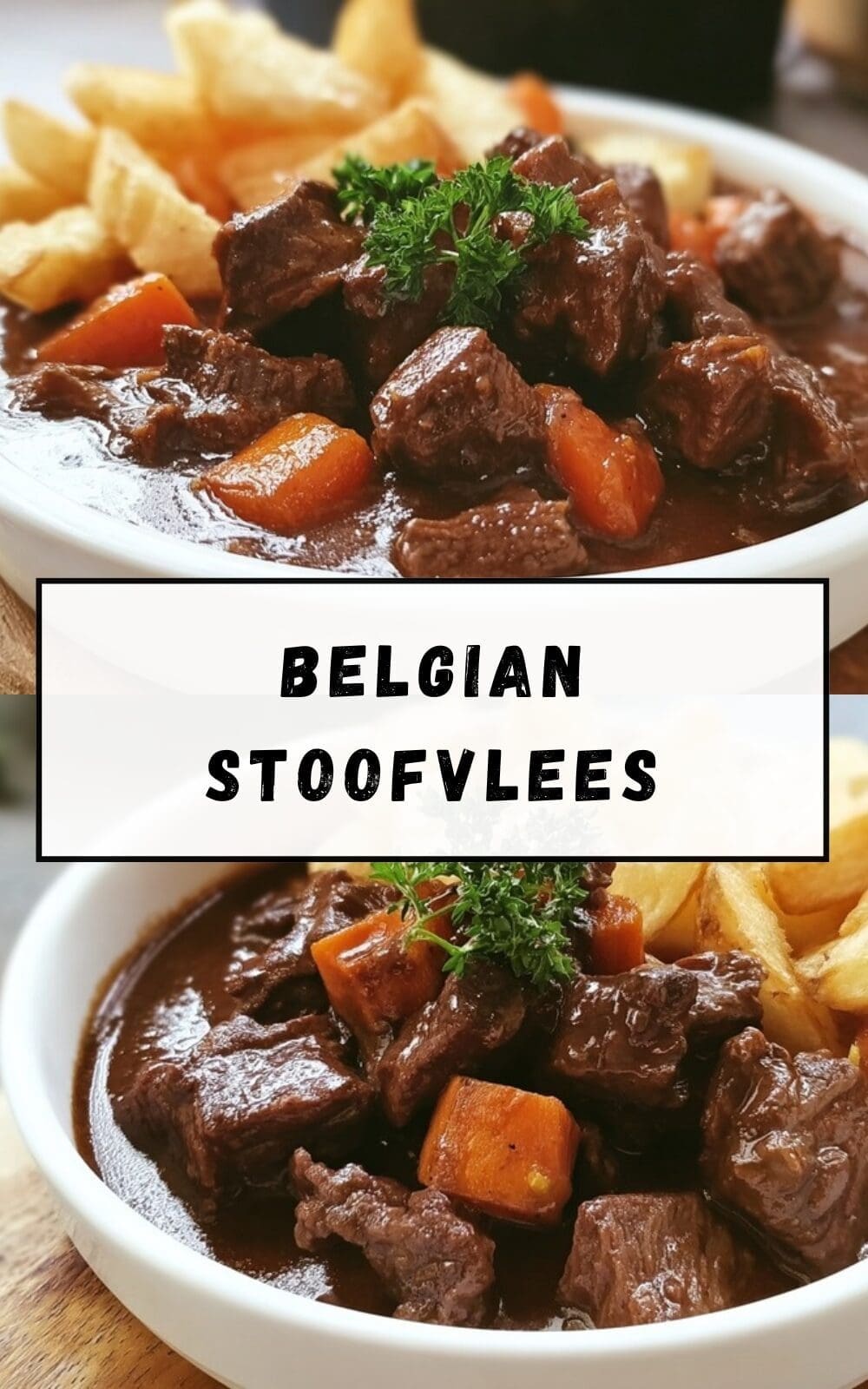
🍲 Discover authentic Stoofvlees: fork-tender beef in rich Belgian beer gravy, infused with herbs and spices for deeply comforting Flemish warmth.
🥩 Slow-simmered perfection pairs with fries or bread – hearty, beer-braised bliss that’s worth the wait for special dinners!
- Total Time: 10 hours 10 minutes
- Yield: 4 servings
Ingredients
– 1 pound cubed beef for the hearty stew base
– 1 small minced onion for marinade depth and aroma
– 4 cloves minced garlic for savory flavor throughout
– 1 sprig fresh rosemary herb fragrance in the marinade
– 1/2 teaspoon dried thyme earthy herbal warmth
– 1/2 teaspoon sweet paprika mild sweetness and color
– 1/2 teaspoon smoked paprika smoky depth
– 1/2 teaspoon hot paprika gentle heat
– 1 tablespoon coarse mustard tang and tenderizing
– 2 tablespoons red or white wine vinegar brightens and balances richness
– 2 tablespoons all-purpose flour to coat beef and help thicken
– 2 tablespoons flavorless cooking oil (divided) for browning and sautéing
– 1 large diced onion sweeter stew foundation
– 1 bottle Belgian brown ale (about 12 ounces) signature malty beer flavor
– 1 cup beef broth adds body and savory depth
– 1 cup water helps build stew volume
– 2 dried bay leaves subtle herbal backdrop
– 1 tablespoon brown sugar balances acidity and roundness
– 1/4 teaspoon salt seasoning
– 1/8 teaspoon ground black pepper warm, peppery bite
– 1 teaspoon coarse mustard final flavor boost
– 1 large carrot natural sweetness and color
– 1 minced garlic clove carrot aromatics
– 1/2 sprig fresh rosemary (chopped) fresh herbal lift
– 1/4 teaspoon olive oil carrot sauté
– salt and pepper to taste season carrots
Instructions
1-Cut and marinate the beef (first step): Cut beef into 1-inch cubes. Mix beef with the marinade ingredients, including 1 small minced onion, 4 cloves minced garlic, 1 sprig fresh rosemary, dried thyme, three paprikas (sweet, smoked, hot), coarse mustard, and red or white wine vinegar. Refrigerate for at least 4 hours or overnight.
2-Prep before cooking (second step): Remove beef from the fridge about 20 minutes before cooking. Discard the rosemary sprig from the marinade. Coat the beef with 2 tablespoons all-purpose flour right before browning.
3-Brown the beef (third step): In a Dutch oven, brown beef in batches using 2 tablespoons flavorless cooking oil (divided). Browning matters for depth. As an optional time-saver, if you enjoy pairing stews with potatoes, you might also like this steak frites guide for serving ideas.
4-Sauté the base and deglaze (fourth step): Sauté 1 large diced onion in the pot. Deglaze with 1 bottle (12 ounces) Belgian brown ale, scraping up the browned bits stuck to the bottom. Those bits are flavor, so take your time here.
5-Build the stew (fifth step): Return browned beef to the pot with 1 cup beef broth, 1 cup water, 2 dried bay leaves, 1 tablespoon brown sugar, 1/4 teaspoon salt, and 1/8 teaspoon ground black pepper. Bring to a boil.
6-Simmer low and slow (sixth step): Cover, reduce to low heat, and simmer for 4-5 hours. Stir every 45 minutes to prevent sticking. If the stew seems too thick, add water as needed and scrape the pot bottom.
7-Cook the carrots separately (seventh step): While the stew simmers, separately sauté 1 large carrot with 1 minced garlic clove, chopped 1/2 sprig rosemary, and 1/4 teaspoon olive oil. Season with salt and pepper.
8-Finish with carrots and mustard (final step): Add the sautéed carrots to the stew along with 1 teaspoon coarse mustard. Cook uncovered for 1 more hour so the sauce finishes thickening and the flavors settle. Serve with crusty bread, Belgian fries, or roasted potatoes.
Last Step:
Please leave a rating and comment letting us know how you liked this recipe! This helps our business to thrive and continue providing free, high-quality recipes for you.Notes
🍺 Marinate overnight for maximum flavor infusion into the beef.
🥄 Deglaze pot thoroughly after browning to capture all rich fond.
🥕 Sauté carrots separately and add late to keep their color and crunch.
- Prep Time: 10 minutes
- Marinating: 4 hours (overnight best)
- Cook Time: 6 hours
- Category: Soups & Stews
- Method: Stovetop
- Cuisine: Belgian
Nutrition
- Serving Size: 1 bowl
- Calories: 450 kcal
- Sugar: 8g
- Sodium: 800mg
- Fat: 25g
- Saturated Fat: 8g
- Unsaturated Fat: 17g
- Trans Fat: 0g
- Carbohydrates: 20g
- Fiber: 3g
- Protein: 35g
- Cholesterol: 100mg