Why You’ll Love This Hainanese Chicken Rice
- Ease of preparation: Poaching the chicken and cooking the rice happens on your schedule, and the recipe is straightforward even for busy nights.
- Distinctive flavor: The rice tastes rich and aromatic because it’s cooked with chicken fat and stock reserved from poaching.
- Versatility: You can adjust spice with the chili sauce, salt levels, and even swap portions to fit different preferences.
- Comforting, balanced meal: Per serving, it’s protein-forward and pairs beautifully with warm broth and bright sauces.
If you want an authentic recipe that feels special but still doable at home, this Hainanese Chicken Rice plan gives you that classic restaurant result: silky chicken, fragrant rice, and three iconic dips.
For another comforting chicken meal idea, you might also enjoy this chicken a la king when you want creamy comfort without extra fuss.
Tip: The “secret” is not one fancy ingredient. It’s the process: gentle poaching, ice bath shock, then cooking rice with chicken fat and stock.
For health-minded readers, chicken can be a helpful protein choice in balanced meals. You can read more about chicken nutrition and health benefits on WebMD.
Jump to:
- Why You’ll Love This Hainanese Chicken Rice
- Essential Ingredients for Hainanese Chicken Rice
- Ingredients for Hainanese Chicken Rice
- Special Dietary Options
- How to Prepare the Perfect Hainanese Chicken Rice: Step-by-Step Guide
- Quick Overview (So You Know What’s Coming)
- To Make the Chicken
- To Make the Rice
- To Make the Ginger-Garlic Sauce
- To Make the Sweet Dark Soy Sauce
- To Make the Chili Sauce
- Serving the Meal
- Protein and Main Component Alternatives
- Chicken Substitutions
- Rice Adjustments
- Keeping the “Authentic” Idea
- Vegetable, Sauce, and Seasoning Modifications
- Vegetable Pairings
- Ginger-Garlic Sauce Adjustments
- Sweet Dark Soy Sauce Tweaks
- Chili Sauce Consistency
- Mastering Hainanese Chicken Rice: Advanced Tips and Variations
- Pro Cooking Techniques
- Flavor Variations
- Presentation Tips
- Make-Ahead Options
- How to Store Hainanese Chicken Rice: Best Practices
- Refrigeration
- Freezing
- Reheating
- Meal Prep Considerations
- FAQs: Frequently Asked Questions About Hainanese Chicken Rice
- What makes the rice in Hainanese chicken rice taste so good?
- What type of chicken should I use for Hainanese chicken rice?
- How do you know when poached chicken for Hainanese chicken rice is done?
- What are the three sauces for Hainanese chicken rice?
- Why put Hainanese chicken in an ice bath after poaching?
- Hainanese Chicken Rice
- Ingredients
- Instructions
- Last Step:
- Notes
- Nutrition
- Did you make this recipe?
Essential Ingredients for Hainanese Chicken Rice
Before you start, organize ingredients by section. That way the chicken, rice, and sauces move smoothly without last-minute scrambling.
Ingredients for Hainanese Chicken Rice
- For the Chicken
- 1 small chicken (3-3½ pounds, preferably buddhist-style with head and feet on or organic)
- 1 tablespoon salt
- 12-14 cups water
- 4-5 slices ginger
- 2 whole scallions
- Ice
- For the Rice
- 2 ounces chicken fat (taken from the cavity of the chicken)
- 1 teaspoon neutral oil (such as vegetable, canola, or avocado oil)
- 4 cloves garlic, minced
- 3 cups uncooked white jasmine rice, washed and drained
- Chicken stock from cooking the chicken
- 2 teaspoons salt
- For the Ginger-Garlic Sauce
- 4-inch piece ginger, roughly chopped
- 2 cloves garlic
- 3 tablespoons neutral oil
- 1 pinch salt
- For the Sweet Dark Soy Sauce
- 1/4 cup water
- 1.25 ounces rock sugar or 2.5 tablespoons granulated sugar
- 1/4 cup dark soy sauce
- For the Chili Sauce
- 3 fresh red chilies (medium spice level)
- 1.5-inch piece ginger
- 2 cloves garlic
- 1/4 teaspoon salt
- 1/2 teaspoon sugar
- 1/4 teaspoon sugar
- 1 tablespoon fresh lime juice (juice of 1/2 lime)
- 1/2 teaspoon rice vinegar or white vinegar
- 2 tablespoons broth from boiling the chicken
Special Dietary Options
This recipe is naturally gluten-free if your dark soy sauce is gluten-free. For other needs, you can adjust in these practical ways.
- Vegan: Swap chicken and chicken fat for plant-based alternatives (note: the classic chicken stock flavor will be different). Use a vegan “fat” or neutral oil plus a vegetable broth base.
- Gluten-free: Choose gluten-free dark soy sauce and verify any vinegar used is certified gluten-free.
- Low-calorie: Reduce chicken fat slightly and use less oil in the rice and sauces. Keep portion sizes smaller and load up on sides like cucumber.
How to Prepare the Perfect Hainanese Chicken Rice: Step-by-Step Guide
This hainanese chicken rice recipe at home is designed to be methodical. Each step supports the next: chicken first for flavor, then rice that soaks up that flavor, then sauces that bring brightness.
Quick Overview (So You Know What’s Coming)
| Component | Time Focus | What to Watch |
|---|---|---|
| Poached chicken | 30-35 minutes (or 40-50 for larger) | Gentle simmer, not a hard boil |
| Rice | About 15-20 minutes cook + rest | No stirring, use stock not plain water |
| Three sauces | 10-20 minutes total | Don’t burn garlic, adjust thickness with broth |
To Make the Chicken
First Step: Wash the chicken clean and reserve the chicken fat from the cavity. Pat dry and rub the skin lightly with 1 tablespoon salt for a sheen.
Second Step: Bring 12-14 cups water with 4-5 slices ginger and 2 whole scallions to a boil in a large stockpot.
Third Step: Lower the chicken breast-side up so the breast pokes just above water. When boiling again, lift chicken briefly to pour out cold water from the cavity, then place back in the pot.
Fourth Step: Bring to a boil once more, then reduce heat to a barely simmer with low movement in water. Cover and cook about 30-35 minutes (about 10-11 minutes per pound).
Fifth Step: For chickens over 3.5 pounds, cook 40-50 minutes. Check doneness by inserting a toothpick into the thigh until it touches bone; clear juices mean it’s cooked.
Final Step: Prepare an ice bath when the timer is up, then remove chicken carefully into ice bath for 15 minutes to stop cooking and lock in juices. Drain and cover until ready to cut. Optional: leave poaching liquid simmering uncovered to reduce flavor for rice.
Why the ice bath matters: it stops carryover cooking so the meat stays juicy, and the skin firms for that classic silky texture.
To Make the Rice
First Step: While chicken cools, heat a wok or skillet on medium. Add 2 ounces chicken fat and 1 teaspoon neutral oil, cooking until about 1 tablespoon fat renders.
Second Step: Add 4 cloves minced garlic and fry briefly, avoiding burning. Stir until fragrant, because burnt garlic will turn bitter.
Third Step: Add 3 cups uncooked rice and stir for two minutes. This toasting step helps each grain hold flavor.
Fourth Step: Turn off heat and transfer rice to a rice cooker. Add chicken stock instead of water to the ‘4 cup’ line (note: 3 US cups = 4 rice cooker cups) and add 2 teaspoons salt. Start cooking.
Fifth Step: If you do not have a rice cooker, soak toasted rice in 4 cups chicken stock with salt for 20 minutes. Cover and bring to boil in a pot, reduce heat to low, and simmer 15 minutes until liquid is absorbed and rice is tender.
Final Step: Let the rice rest briefly off heat before serving. Avoid stirring after cooking to prevent mushiness.
If you like rice-friendly meal prep, you might also enjoy slow-cooker sunday sauce to plan ahead for quick dinners on busy days.
To Make the Ginger-Garlic Sauce
First Step: Grind the 4-inch piece ginger and 2 cloves garlic finely in a food processor.
Second Step: Heat 3 tablespoons neutral oil in a small pot; gently fry ginger and garlic until aromatic and lightly caramelized to remove raw flavors.
Third Step: Add 1 pinch salt and transfer to a dish.
Final Step: If sauce thickens too much, stir in hot chicken water to loosen.
To Make the Sweet Dark Soy Sauce
First Step: Heat 1/4 cup water and 1.25 ounces rock sugar (or 2.5 tablespoons granulated sugar) in a small saucepan over medium heat, stirring until sugar dissolves and syrup thickens.
Second Step: Add 1/4 cup dark soy sauce, stir, and transfer to dish.
Final Step: Serve at room temp so it coats rice without overpowering it.
To Make the Chili Sauce
First Step: Grind 3 fresh red chilies, 1.5-inch piece ginger, and 2 cloves garlic finely in a food processor, scraping sides as needed.
Second Step: Add 1/4 teaspoon salt, 1/2 teaspoon sugar, 1/4 teaspoon sugar, 1 tablespoon fresh lime juice (juice of 1/2 lime), and 1/2 teaspoon rice vinegar or white vinegar.
Third Step: Pulse to combine, transfer to a bowl, then add 2 tablespoons broth from boiling the chicken one tablespoon at a time until desired saucy consistency is reached.
Final Step: For texture, you can also make it with a mortar and pestle.
Serving the Meal
Carve the chicken and serve with flavored rice and the three sauces. Pour dark soy sauce and ginger sauce over rice and enjoy each bite with chili sauce according to taste.
Serve heated chicken broth seasoned with salt as a side if desired. That warm sip ties the whole plate together.
Protein and Main Component Alternatives
Classic Hainanese Chicken Rice uses whole poached chicken, but you can still adjust for availability or personal preference while keeping the core idea: poach in seasoned water, then cook rice with the flavorful liquid and fat.
Chicken Substitutions
- Turkey (for a different but similar texture): Use skin-on turkey breast or a whole small turkey. Increase poaching time as needed and rely on clear juices and a thermometer for doneness.
- Duck: Duck fat can add a deeper richness. Keep the same gentle-simmer approach, then adjust salt lightly since duck can taste stronger.
- Bone-in chicken pieces: If you can’t find a whole chicken, use bone-in thighs or a mix. You’ll lose some “whole bird” flavor, so let the poaching liquid reduce a bit more for the rice.
Rice Adjustments
- Short on jasmine rice: White long-grain rice works, but jasmine gives the classic fragrant bite.
- Feeding a crowd: Consider increasing rice quantity if feeding more than 5-6 people or if rice lovers will be eating.
Keeping the “Authentic” Idea
The goal is to protect the signature flavor chain:
- Render chicken fat
- Toast garlic with rice
- Cook rice with chicken stock
- Finish with three sauces for heat, tang, and sweetness
Vegetable, Sauce, and Seasoning Modifications
Even though the dish is known for its chicken, rice, and sauces, you still have room to personalize the flavors to match your kitchen and your guests.
Vegetable Pairings
- Cucumber: Slice thin for crunch and freshness. It helps balance the savory richness.
- Blanched greens: Bok choy or Chinese broccoli can add color and a gentle bitterness that cuts through the fat.
Ginger-Garlic Sauce Adjustments
- If the sauce thickens too much, stir in hot chicken water to loosen it.
- Want it milder? Use a smaller ginger portion or reduce the frying time so it stays less pungent.
Sweet Dark Soy Sauce Tweaks
- Prefer less sweetness? Reduce sugar slightly, but remember the balance matters because this sauce pairs with salty rice.
- For a deeper color, keep the syrup just until dissolved and slightly thickened.
Chili Sauce Consistency
- Add broth gradually to reach your preferred saucy thickness.
- If your chilies are very spicy, reduce the chili quantity and keep the ginger-garlic base the same.
For a helpful health read about the benefits of ginger, see Johns Hopkins Medicine.
Mastering Hainanese Chicken Rice: Advanced Tips and Variations
Once you nail the method, you can fine-tune results based on your stove, your chicken size, and your preferred texture.
Pro Cooking Techniques
- Choose the right chicken: For best results, use a buddhist-style whole chicken with head and feet on. If unavailable, organic or pasture-raised is a good alternative.
- Gentle simmer only: Keep poaching water at a very gentle simmer to avoid boiling vigorously, which can toughen chicken.
- Use the ice bath: After cooking, remove to an ice bath to stop cooking and improve skin texture.
- Don’t burn garlic: In the rice step, fry garlic briefly and stop once fragrant.
- Rice cooker calibration: 1 rice cooker cup equals 3/4 US cup. Adjust the water level to your rice cooker’s calibration.
Flavor Variations
- More savory rice: Optionally reduce poaching liquid uncovered for more concentrated flavor.
- Thicker ginger-garlic sauce: Cook ginger and garlic slightly longer until more caramelized, then adjust salt.
- Heat control: Keep chili sauce medium spice by using the stated chili amount, then fine-tune with broth and personal taste.
Presentation Tips
- Slice chicken evenly so each bite shows both skin and juicy meat.
- Pour sauces over rice right before eating for the best aroma.
- Serve with slightly warmed chicken broth seasoned with salt for authenticity and extra flavor.
Make-Ahead Options
- Chicken: You can poach and chill the chicken a few hours ahead, then carve when ready.
- Sauces: Ginger-garlic, sweet soy, and chili sauce can be made earlier and stored in the fridge.
- Rice: Cook rice closer to serving since it’s best when slightly warm and fragrant.
How to Store Hainanese Chicken Rice: Best Practices
Storing leftovers safely helps maintain flavor and texture, especially for the chicken and rice.
Refrigeration
- Store chicken, rice, and sauces separately if possible.
- Refrigerate within 2 hours of cooking.
- Use within 3-4 days for best quality.
Freezing
- Freeze chicken and rice separately in airtight containers.
- Freeze sauces in small portions so you can thaw only what you need.
Reheating
- Chicken: Reheat gently to avoid drying. Add a splash of warm broth if needed.
- Rice: Reheat with a small amount of broth or water and cover to steam back tenderness.
- Sauces: Warm sweet soy and chili slightly if you like, but ginger-garlic can be served room temp.
Meal Prep Considerations
- If you want lunch-ready portions, portion chicken and rice right after reheating so they don’t dry out.
- Keep chili sauce separate to control heat each time.

FAQs: Frequently Asked Questions About Hainanese Chicken Rice
What makes the rice in Hainanese chicken rice taste so good?
What type of chicken should I use for Hainanese chicken rice?
How do you know when poached chicken for Hainanese chicken rice is done?
What are the three sauces for Hainanese chicken rice?
Why put Hainanese chicken in an ice bath after poaching?
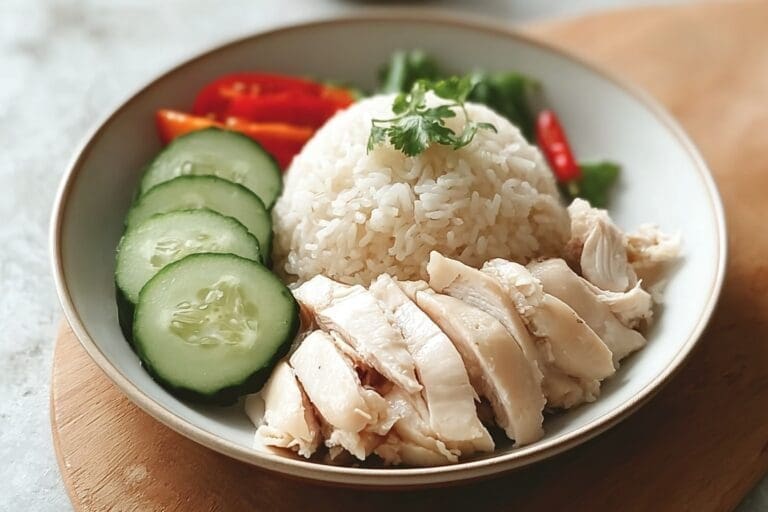
Hainanese Chicken Rice
🍗🍚 Silky poached chicken over fragrant chicken fat jasmine rice with ginger garlic chili sauces – authentic Hainanese home luxury!
🇸🇬 26g protein nourishing classic, silky skin tender meat for ultimate comfort meals.
- Total Time: 2 hours 35 minutes
- Yield: 6 servings
Ingredients
– 1 small chicken (3-3½ pounds, preferably buddhist-style with head and feet on or organic)
– 1 tablespoon salt
– 12-14 cups water
– 4-5 slices ginger
– 2 whole scallions
– Ice
– 2 ounces chicken fat (taken from the cavity of the chicken)
– 1 teaspoon neutral oil (such as vegetable, canola, or avocado oil)
– 4 cloves garlic, minced
– 3 cups uncooked white jasmine rice, washed and drained
– Chicken stock from cooking the chicken
– 2 teaspoons salt
– 4-inch piece ginger, roughly chopped
– 2 cloves garlic
– 3 tablespoons neutral oil
– 1 pinch salt
– 1/4 cup water
– 1.25 ounces rock sugar or 2.5 tablespoons granulated sugar
– 1/4 cup dark soy sauce
– 3 fresh red chilies (medium spice level)
– 1.5-inch piece ginger
– 2 cloves garlic
– 1/4 teaspoon salt
– 1/2 teaspoon sugar
– 1/4 teaspoon sugar
– 1 tablespoon fresh lime juice (juice of 1/2 lime)
– 1/2 teaspoon rice vinegar or white vinegar
– 2 tablespoons broth from boiling the chicken
Instructions
1-First Step: Wash the chicken clean and reserve the chicken fat from the cavity. Pat dry and rub the skin lightly with 1 tablespoon salt for a sheen.
2-Second Step: Bring 12-14 cups water with 4-5 slices ginger and 2 whole scallions to a boil in a large stockpot.
3-Third Step: Lower the chicken breast-side up so the breast pokes just above water. When boiling again, lift chicken briefly to pour out cold water from the cavity, then place back in the pot.
4-Fourth Step: Bring to a boil once more, then reduce heat to a barely simmer with low movement in water. Cover and cook about 30-35 minutes (about 10-11 minutes per pound).
5-Fifth Step: For chickens over 3.5 pounds, cook 40-50 minutes. Check doneness by inserting a toothpick into the thigh until it touches bone; clear juices mean it’s cooked.
6-Final Step: Prepare an ice bath when the timer is up, then remove chicken carefully into ice bath for 15 minutes to stop cooking and lock in juices. Drain and cover until ready to cut. Optional: leave poaching liquid simmering uncovered to reduce flavor for rice.
7-First Step: While chicken cools, heat a wok or skillet on medium. Add 2 ounces chicken fat and 1 teaspoon neutral oil, cooking until about 1 tablespoon fat renders.
8-Second Step: Add 4 cloves minced garlic and fry briefly, avoiding burning. Stir until fragrant, because burnt garlic will turn bitter.
9-Third Step: Add 3 cups uncooked rice and stir for two minutes. This toasting step helps each grain hold flavor.
10-Fourth Step: Turn off heat and transfer rice to a rice cooker. Add chicken stock instead of water to the ‘4 cup’ line (note: 3 US cups = 4 rice cooker cups) and add 2 teaspoons salt. Start cooking.
11-Fifth Step: If you do not have a rice cooker, soak toasted rice in 4 cups chicken stock with salt for 20 minutes. Cover and bring to boil in a pot, reduce heat to low, and simmer 15 minutes until liquid is absorbed and rice is tender.
12-Final Step: Let the rice rest briefly off heat before serving. Avoid stirring after cooking to prevent mushiness.
13-First Step: Grind the 4-inch piece ginger and 2 cloves garlic finely in a food processor.
14-Second Step: Heat 3 tablespoons neutral oil in a small pot; gently fry ginger and garlic until aromatic and lightly caramelized to remove raw flavors.
15-Third Step: Add 1 pinch salt and transfer to a dish.
16-Final Step: If sauce thickens too much, stir in hot chicken water to loosen.
17-First Step: Heat 1/4 cup water and 1.25 ounces rock sugar (or 2.5 tablespoons granulated sugar) in a small saucepan over medium heat, stirring until sugar dissolves and syrup thickens.
18-Second Step: Add 1/4 cup dark soy sauce, stir, and transfer to dish.
19-Final Step: Serve at room temp so it coats rice without overpowering it.
20-First Step: Grind 3 fresh red chilies, 1.5-inch piece ginger, and 2 cloves garlic finely in a food processor, scraping sides as needed.
21-Second Step: Add 1/4 teaspoon salt, 1/2 teaspoon sugar, 1/4 teaspoon sugar, 1 tablespoon fresh lime juice (juice of 1/2 lime), and 1/2 teaspoon rice vinegar or white vinegar.
22-Third Step: Pulse to combine, transfer to a bowl, then add 2 tablespoons broth from boiling the chicken one tablespoon at a time until desired saucy consistency is reached.
23-Final Step: For texture, you can also make it with a mortar and pestle.
Last Step:
Please leave a rating and comment letting us know how you liked this recipe! This helps our business to thrive and continue providing free, high-quality recipes for you.Notes
🛁 Ice bath post-poach locks juicy tenderness silky skin.
🍚 Chicken fat rice elevates flavor beyond plain boiled.
🌡️ Gentle simmer prevents tough chewy chicken.
- Prep Time: 30 minutes
- Ice Bath: 15 minutes
- Cook Time: 2 hours 15 minutes
- Category: Main Dishes
- Method: Poach
- Cuisine: Singaporean
- Diet: Gluten Free
Nutrition
- Serving Size: 1/6 recipe
- Calories: 746 kcal
- Sugar: 8 g
- Sodium: 2779 mg
- Fat: 32 g
- Saturated Fat: 8 g
- Unsaturated Fat: 22 g
- Trans Fat: 0 g
- Carbohydrates: 86 g
- Fiber: 2 g
- Protein: 26 g
- Cholesterol: 81 mg