Why You’ll Love This Pie Crust
This flaky butter pie crust is a simple favorite for anyone who enjoys baking at home. It delivers light, flaky layers with a sturdy texture that works well for sweet or savory pies, making it versatile for single or double crust options. Whether you’re a busy parent whipping up a quick dessert or a baking enthusiast experimenting with new recipes, this pie crust comes together easily and offers reliable results.
One key reason you’ll enjoy this recipe is its ease of preparation, requiring just a few basic ingredients and techniques that fit into your schedule. It provides potential health benefits through wholesome ingredients like butter, which adds rich flavor and healthy fats. Plus, it’s adaptable to various dietary needs, helping it appeal to home cooks, students, and even diet-conscious individuals.
This pie crust stands out for its distinctive flavor, blending quality butter with a touch of sugar for a balanced taste that enhances any pie. It’s perfect for busy professionals or newlyweds looking to create special meals without spending too much time. With preparation possible by food processor or hand, it rolls out smoothly and makes baking fun and rewarding for all ages.
Jump to:
- Why You’ll Love This Pie Crust
- Essential Ingredients for Pie Crust
- How to Prepare the Perfect Pie Crust: Step-by-Step Guide
- Getting Started with Your Ingredients
- Forming and Chilling the Dough
- Finishing and Baking the Crust
- Dietary Substitutions to Customize Your Pie Crust – Protein and Main Component Alternatives
- Vegetable, Sauce, and Seasoning Modifications
- Mastering Pie Crust: Advanced Tips and Variations
- How to Store Pie Crust: Best Practices
- FAQs: Frequently Asked Questions About Pie Crust
- How can I make a pie crust that stays flaky and doesn’t get tough?
- What’s the best way to add water when making pie dough?
- Can I make pie crust dough without a food processor?
- How should I store pie crust dough if I’m not using it right away?
- What is blind baking and when should I use it for my pie crust?
- Pie Crust
- Ingredients
- Instructions
- Last Step:
- Notes
- Nutrition
- Did you make this recipe?
Essential Ingredients for Pie Crust
Gathering the right ingredients is the first step to creating a perfect pie crust. Below is a comprehensive list based on the recipe, ensuring you have everything needed for success. Each item includes precise measurements to make your baking straightforward and accurate.
- 2 ½ cups all-purpose flour, spooned and leveled
- 1/2 teaspoon fine sea salt or 1 teaspoon kosher salt
- 1 tablespoon sugar (optional, for balancing flavor in sweet pies or quiches)
- 1 cup very cold unsalted butter, cut into 1/2-inch cubes
- 6 to 8 tablespoons ice water, or more as needed
For special dietary options, you can adapt this list to fit your needs. These changes help make the recipe work for everyone, from food enthusiasts to celebration planners. Remember, keeping ingredients cold is key to achieving that flaky texture everyone loves.
How to Prepare the Perfect Pie Crust: Step-by-Step Guide
Getting Started with Your Ingredients
First, prepare your workspace and gather all ingredients, ensuring butter remains very cold for better flakiness. This step sets the stage for a smooth process, as outlined in the recipe summary. Combine 1 ½ cups of the all-purpose flour, the salt, and sugar (if using) in your chosen method either a food processor or by hand.
Next, add the cold unsalted butter cubes and mix until the flour is coated and the mixture can be pressed together, which takes about 15 seconds in a food processor. If you’re making it by hand, use a pastry blender to cut the butter into the flour until it’s coarse and mealy. Then, add the remaining 1 cup of all-purpose flour and continue mixing until it’s crumbly and evenly distributed.
Forming and Chilling the Dough
Once the mixture is ready, sprinkle with 4 tablespoons of ice water and press until the dough just holds together; add more ice water in small amounts if needed. This gradual addition helps based on humidity, as noted in the tips. Shape the dough into two disks, wrap tightly in plastic wrap, and refrigerate for at least 1 hour or up to 3 days to relax the gluten and enhance texture.
After chilling, let one dough disk sit at room temperature for about 5 minutes. Lightly flour your work surface, the dough, and a rolling pin, then roll it into a 12-inch diameter circle, turning frequently to prevent sticking as described in the directions. Transfer the dough to a pie dish by rolling it around the pin and unrolling over the dish; press gently into the bottom and sides without stretching.
Finishing and Baking the Crust
Fold the overlapping edges under to create a 1/4-inch border and crimp by pinching for a decorative finish. For double crust pies, add your filling, place the top crust, trim edges to a 3/4-inch overhang, fold under, and crimp to seal. Always refrigerate the unbaked crust or pie for at least 30 minutes before baking to maintain shape.
For blind baking a single crust, preheat the oven to 375°F (190°C), pierce the chilled crust bottom all over, line with parchment, and fill with pie weights or dried beans; bake for 15 minutes. Remove the weights and parchment, then bake for another 15-20 minutes until light golden. For a shiny finish, brush with a mixture of egg yolk and cream, and bake 5-8 minutes more before letting it cool.
For double crust pies, follow the bottom crust steps, add filling, top with the second dough, seal, chill for at least 30 minutes, brush with egg wash, sprinkle with sugar if desired, cut slits for steam, and bake at around 400°F as per your pie recipe. The total preparation time is about 1 hour 15 minutes, including chilling, with extra time for rolling and baking. For more ideas on rolling dough, check out this guide on rolling pie dough from a trusted source.
Dietary Substitutions to Customize Your Pie Crust – Protein and Main Component Alternatives
Customizing your pie crust can make it fit your lifestyle, starting with swaps for the main components. For instance, use coconut oil or vegan butter to replace traditional butter for those with plant-based preferences. This keeps the dough moist and flaky while accommodating dietary needs, as suggested in the recipe tips.
Gluten-sensitive bakers can swap wheat flour with almond flour or a gluten-free blend to maintain that perfect consistency. These alternatives ensure the pie crust remains reliable, drawing from the nutritional info that highlights balanced fats and carbs. Whether you’re a working professional or a senior, these changes make baking accessible and enjoyable.
Vegetable, Sauce, and Seasoning Modifications
To vary flavors, try different fats like olive oil or avocado oil, which can alter the taste profile subtly. Adding seasonings such as cinnamon or nutmeg creates a sweet twist, ideal for dessert pies. Incorporating fruit purees or herbs can boost nutrition and flavor, aligning with goals for travelers or busy parents seeking quick adaptations.
Mastering Pie Crust: Advanced Tips and Variations
Taking your pie crust to the next level involves some pro techniques, like chilling your tools and ingredients thoroughly before starting. Using a food processor ensures uniform mixing, while precise rolling methods help achieve the ideal thickness for that flaky result. As mentioned in the tips, keeping butter cold is crucial for light layers and minimizing gluten development.
For flavor variations, try infusing the dough with herbs, citrus zest, or spices to create unique profiles that suit any occasion. Presentation tips include brushing the crust with egg wash or sprinkling sugar for an eye-catching finish, perfect for celebration planners. Make-ahead options, such as freezing the dough for up to 3 months, are great for saving time on busy days, as thawing it in the fridge overnight keeps the texture intact.
Add water gradually based on humidity to avoid tough dough, and measure flour by spooning and leveling for accuracy. A simple no-churn ice cream recipe on this site can pair wonderfully with your pie for a complete dessert. These tricks help bakers of all levels, from students to food enthusiasts, create memorable pies every time.
How to Store Pie Crust: Best Practices
Proper storage keeps your pie crust fresh and ready for use. For refrigeration, wrap the dough tightly in plastic wrap and store it in the fridge for up to 3 days to preserve its texture. Freezing is ideal for longer storage, allowing you to seal the dough in a container or bag for up to 2 months before thawing overnight in the refrigerator.
Reheating baked crusts involves gently warming them in an oven at a low temperature to keep the flakiness without drying out. For meal prep, portion the dough into individual disks before freezing, so you can thaw and use one at a time, reducing waste and effort. These methods work well for anyone, from newlyweds to seniors, making pie baking more convenient.

FAQs: Frequently Asked Questions About Pie Crust
How can I make a pie crust that stays flaky and doesn’t get tough?
What’s the best way to add water when making pie dough?
Can I make pie crust dough without a food processor?
How should I store pie crust dough if I’m not using it right away?
What is blind baking and when should I use it for my pie crust?
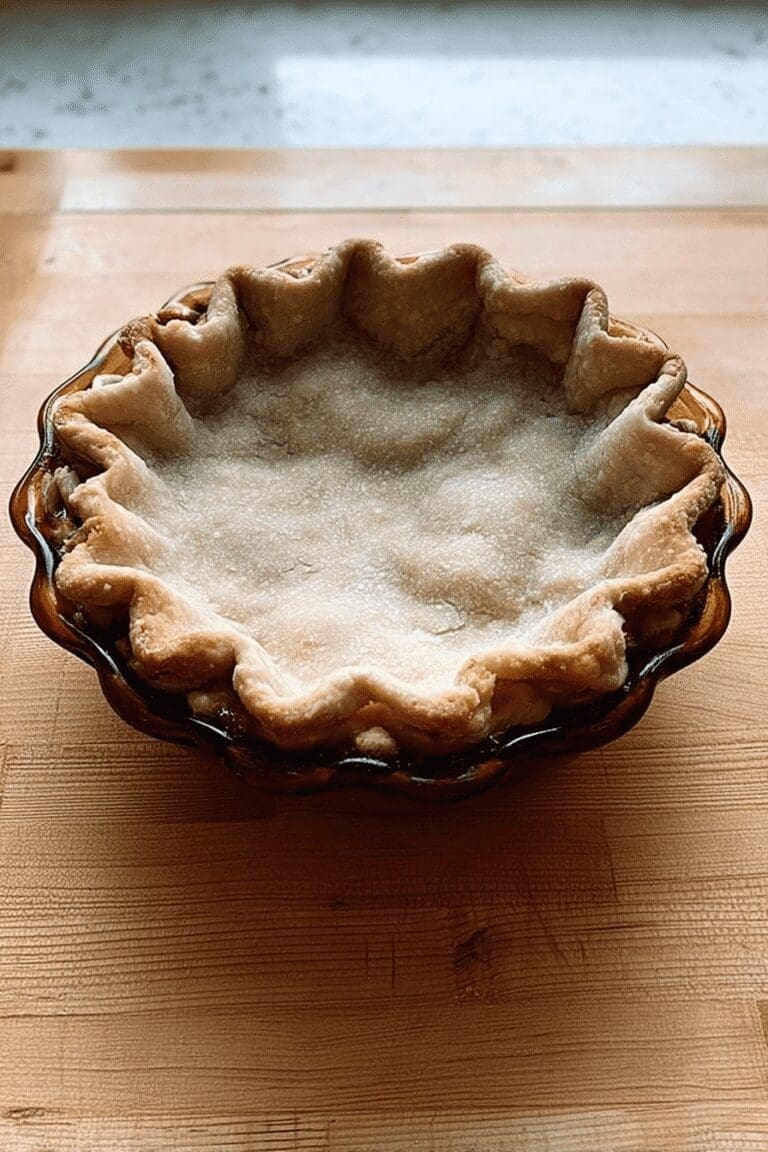
Pie Crust
🥧 This easy flaky butter pie crust delivers light, tender layers that create the perfect base for both sweet and savory pies.
🧈 Made with simple ingredients and straightforward steps, it ensures consistently delicious homemade pastry every time.
- Total Time: 1 hour 45 minutes
- Yield: Enough dough for single or double 9-inch crust pie
Ingredients
2 ½ cups all-purpose flour, spooned and leveled
1/2 teaspoon fine sea salt or 1 teaspoon kosher salt
1 tablespoon sugar for balancing flavor in sweet pies or quiches
1 cup very cold unsalted butter, cut into 1/2-inch cubes
6 to 8 tablespoons ice water, or more as needed
Instructions
1-Getting Started with Your Ingredients: First, prepare your workspace and gather all ingredients, ensuring butter remains very cold for better flakiness. This step sets the stage for a smooth process, as outlined in the recipe summary. Combine 1 ½ cups of the all-purpose flour, the salt, and sugar (if using) in your chosen method either a food processor or by hand.
2- Next, add the cold unsalted butter cubes and mix until the flour is coated and the mixture can be pressed together, which takes about 15 seconds in a food processor. If you’re making it by hand, use a pastry blender to cut the butter into the flour until it’s coarse and mealy. Then, add the remaining 1 cup of all-purpose flour and continue mixing until it’s crumbly and evenly distributed.
3-Forming and Chilling the Dough: Once the mixture is ready, sprinkle with 4 tablespoons of ice water and press until the dough just holds together; add more ice water in small amounts if needed. This gradual addition helps based on humidity, as noted in the tips. Shape the dough into two disks, wrap tightly in plastic wrap, and refrigerate for at least 1 hour or up to 3 days to relax the gluten and enhance texture.
4- After chilling, let one dough disk sit at room temperature for about 5 minutes. Lightly flour your work surface, the dough, and a rolling pin, then roll it into a 12-inch diameter circle, turning frequently to prevent sticking as described in the directions. Transfer the dough to a pie dish by rolling it around the pin and unrolling over the dish; press gently into the bottom and sides without stretching.
5-Finishing and Baking the Crust: Fold the overlapping edges under to create a 1/4-inch border and crimp by pinching for a decorative finish. For double crust pies, add your filling, place the top crust, trim edges to a 3/4-inch overhang, fold under, and crimp to seal. Always refrigerate the unbaked crust or pie for at least 30 minutes before baking to maintain shape.
6- For blind baking a single crust, preheat the oven to 375°F (190°C), pierce the chilled crust bottom all over, line with parchment, and fill with pie weights or dried beans; bake for 15 minutes. Remove the weights and parchment, then bake for another 15-20 minutes until light golden. For a shiny finish, brush with a mixture of egg yolk and cream, and bake 5-8 minutes more before letting it cool.
7- For double crust pies, follow the bottom crust steps, add filling, top with the second dough, seal, chill for at least 30 minutes, brush with egg wash, sprinkle with sugar if desired, cut slits for steam, and bake at around 400°F as per your pie recipe. The total preparation time is about 1 hour 15 minutes, including chilling, with extra time for rolling and baking. For more ideas on rolling dough, check out this guide on rolling pie dough from a trusted source.
Last Step:
Please leave a rating and comment letting us know how you liked this recipe! This helps our business to thrive and continue providing free, high-quality recipes for you.Notes
🧈 Keep butter very cold for flaky layers and use ice water to slow gluten development.
📏 Measure flour by spooning and leveling for accurate results.
❄️ Refrigerate dough before rolling and consider blind baking to prevent soggy bottoms.
- Prep Time: 15 minutes active plus 1 hour chilling
- Chilling and baking time: 1 hour 30 minutes
- Cook Time: 20 to 28 minutes
- Category: Pastry
- Method: Mixing and rolling
- Cuisine: Universal
- Diet: Vegetarian
Nutrition
- Serving Size: 1/8 of dough
- Calories: 345 kcal
- Sugar: 0 g
- Sodium: 150 mg
- Fat: 23 g
- Saturated Fat: 15 g
- Unsaturated Fat: 8 g
- Trans Fat: 0 g
- Carbohydrates: 30 g
- Fiber: 1 g
- Protein: 4 g
- Cholesterol: 61 mg