Why You’ll Love This Reverse Sear Prime Rib
This reverse sear prime rib recipe stands out for its straightforward approach, making it a go-to choice for home cooks aiming for a showstopping meal. You’ll appreciate how the slow roasting keeps the meat tender and juicy, while the quick sear adds a delicious crust that impresses everyone at the table. Whether you’re hosting a holiday gathering or just want a special weekend dinner, this method delivers amazing flavors without overwhelming complexity.
One key benefit is how easy it is to prepare, needing only basic steps that fit into a busy schedule. The technique helps lock in the meat’s natural juices, providing a wholesome option that supports a balanced diet with plenty of protein. Plus, this recipe adapts to various tastes, letting you tweak seasonings or sides to suit dietary preferences, making reverse sear prime rib a flexible favorite.
Beyond the simplicity, the method enhances the beef’s rich taste, turning it into a gourmet experience that’s hard to beat. Imagine pulling a perfectly cooked roast from the oven, ready to sear for that final touch of perfection. It’s all about enjoying high-quality results with minimal fuss, turning any meal into something memorable.
Jump to:
- Why You’ll Love This Reverse Sear Prime Rib
- Essential Ingredients for Reverse Sear Prime Rib
- How to Prepare the Perfect Reverse Sear Prime Rib: Step-by-Step Guide
- Dietary Substitutions to Customize Your Reverse Sear Prime Rib
- Mastering Reverse Sear Prime Rib: Advanced Tips and Variations
- Key Techniques for Better Results
- How to Store Reverse Sear Prime Rib: Best Practices
- FAQs: Frequently Asked Questions About Reverse Sear Prime Rib
- How long does it take to cook prime rib using the reverse sear method?
- What internal temperature should prime rib reach before and after reverse searing?
- How much prime rib should I buy per person for a meal?
- What are good side dishes to serve with reverse sear prime rib?
- Can I repurpose leftover prime rib, and if so, how?
- Reverse Sear Prime Rib
- Ingredients
- Instructions
- Last Step:
- Notes
- Nutrition
- Did you make this recipe?
Essential Ingredients for Reverse Sear Prime Rib
Gathering the right ingredients is key to nailing this reverse sear prime rib. Let’s break down what you need for this flavorful dish, focusing on fresh, high-quality items that bring out the best in the beef.
- 10-pound bone-in standing rib roast
- 2 tablespoons kosher salt
- ½ cup butter, softened
- 2 tablespoons finely chopped fresh rosemary
- 2 tablespoons finely chopped fresh thyme
- Freshly cracked black pepper (to taste)
This structured list includes everything required for the recipe, ensuring you have precise measurements for accurate preparation. Each item plays a vital role, from seasoning the roast to creating a herb-infused butter that adds depth and aroma.
These ingredients come together to make the meat tender and full of flavor. For instance, the kosher salt enhances the natural taste, while herbs like rosemary and thyme infuse a fresh, earthy note. Remember, using fresh ingredients helps achieve that perfect balance.
How to Prepare the Perfect Reverse Sear Prime Rib: Step-by-Step Guide
Getting started with your reverse sear prime rib begins with simple seasoning. Begin by seasoning the roast generously with the 2 tablespoons of kosher salt and cover it loosely with plastic wrap; refrigerate overnight to let the flavors sink in. This step is crucial as it helps the salt penetrate the meat, making it more tender and flavorful.
Next, remove the roast from the refrigerator and allow it to come to room temperature for even cooking. Preheat your oven or smoker to 200 degrees F, then in a small bowl, mix the ½ cup of softened butter, 2 tablespoons of finely chopped fresh rosemary, 2 tablespoons of finely chopped fresh thyme, and freshly cracked black pepper to taste. Slather this butter mixture over the roast and place it in a large roasting pan before transferring it to the oven.
Roast until the internal temperature reaches 115 degrees F for medium-rare, which takes about 3½ to 4 hours. Once done, remove from the oven, tent with aluminum foil, and rest for about 20 minutes to let the juices settle. Finally, heat a large cast iron skillet over high heat, sear the roast on all sides for 1-2 minutes to form a nice crust, then rest for another 3-5 minutes before removing the ribs and slicing into ½-inch thick pieces to serve.
The preparation time is straightforward: prep time is 10 minutes, cook time is 3 hours 45 minutes, and total time is about 3 hours 55 minutes. Following these steps ensures a juicy, perfectly cooked result every time. Explore simple baking ideas on our site for complementary desserts to pair with this savory main course.

Dietary Substitutions to Customize Your Reverse Sear Prime Rib
Adapting this reverse sear prime rib for different diets is easy with a few smart swaps. Start with the main protein if you’re looking for alternatives, try using seitan roast or large portobello mushrooms for a vegetarian twist, which keeps the essence of the dish while fitting plant-based needs.
For those watching calories, swap the prime rib with lean turkey breast or pork tenderloin to cut down on fat without losing that satisfying bite. This recipe is naturally gluten-free, but always check that your spices and oils are certified gluten-free to avoid any issues. You can also experiment with vegetables like roasted asparagus or carrots to add a fresh, nutritious element.
Herbs and seasonings offer another layer of customization; for example, try swapping the thyme for smoked paprika to create a smoky flavor profile. These changes make reverse sear prime rib versatile for everyone, from busy parents to food enthusiasts seeking variety.
Mastering Reverse Sear Prime Rib: Advanced Tips and Variations
Taking your reverse sear prime rib to the next level involves some pro techniques like using a probe thermometer to track the internal temperature accurately and prevent overcooking. Another tip is to brine the roast overnight for extra juiciness, drawing out practice tips from the nutritional information provided, which shows how the method retains key nutrients.
Flavor variations can include adding dry rubs with smoked paprika or chipotle for a spicy kick, or incorporating fresh herbs like rosemary and thyme directly under the crust. For presentation, slice the meat thinly and arrange it on a plate with garnishes such as fresh herbs and a drizzle of au jus to make it visually appealing.
Make-ahead options are ideal for busy schedules; season and prep the roast a day in advance, refrigerating it uncovered for a dry brine, then bring it to room temperature before cooking. Suggested sides like mashed potatoes, salad, and gravy from drippings can enhance the meal, and adjust baking time for boneless roasts as they cook faster about 15-20 minutes per pound for larger cuts over 20 pounds.
Key Techniques for Better Results
Use a digital thermometer to monitor doneness, aiming for 115 degrees F before searing since the temperature rises during that step. Rest the meat properly to keep it tender, and if your skillet is too small, sear under a broiler while watching closely to avoid burning.
How to Store Reverse Sear Prime Rib: Best Practices
Proper storage keeps your reverse sear prime rib fresh and safe to eat. Store leftovers in an airtight container and refrigerate within two hours of cooking; they should be consumed within 3-4 days to maintain quality and taste.
For longer keeping, wrap the meat tightly in plastic wrap and aluminum foil or use vacuum-sealed bags for freezing, where it can last up to 3 months. When reheating, do it gently in a low oven at about 250 degrees F to preserve tenderness and prevent drying out.
Meal prep ideas include slicing the roast before storing for easy portions, and adding a bit of au jus or broth to keep it moist during reheating. This approach works well for working professionals or busy parents looking to have quick meals ready.
FAQs: Frequently Asked Questions About Reverse Sear Prime Rib
How long does it take to cook prime rib using the reverse sear method?
What internal temperature should prime rib reach before and after reverse searing?
How much prime rib should I buy per person for a meal?
What are good side dishes to serve with reverse sear prime rib?
Can I repurpose leftover prime rib, and if so, how?
Reverse Sear Prime Rib
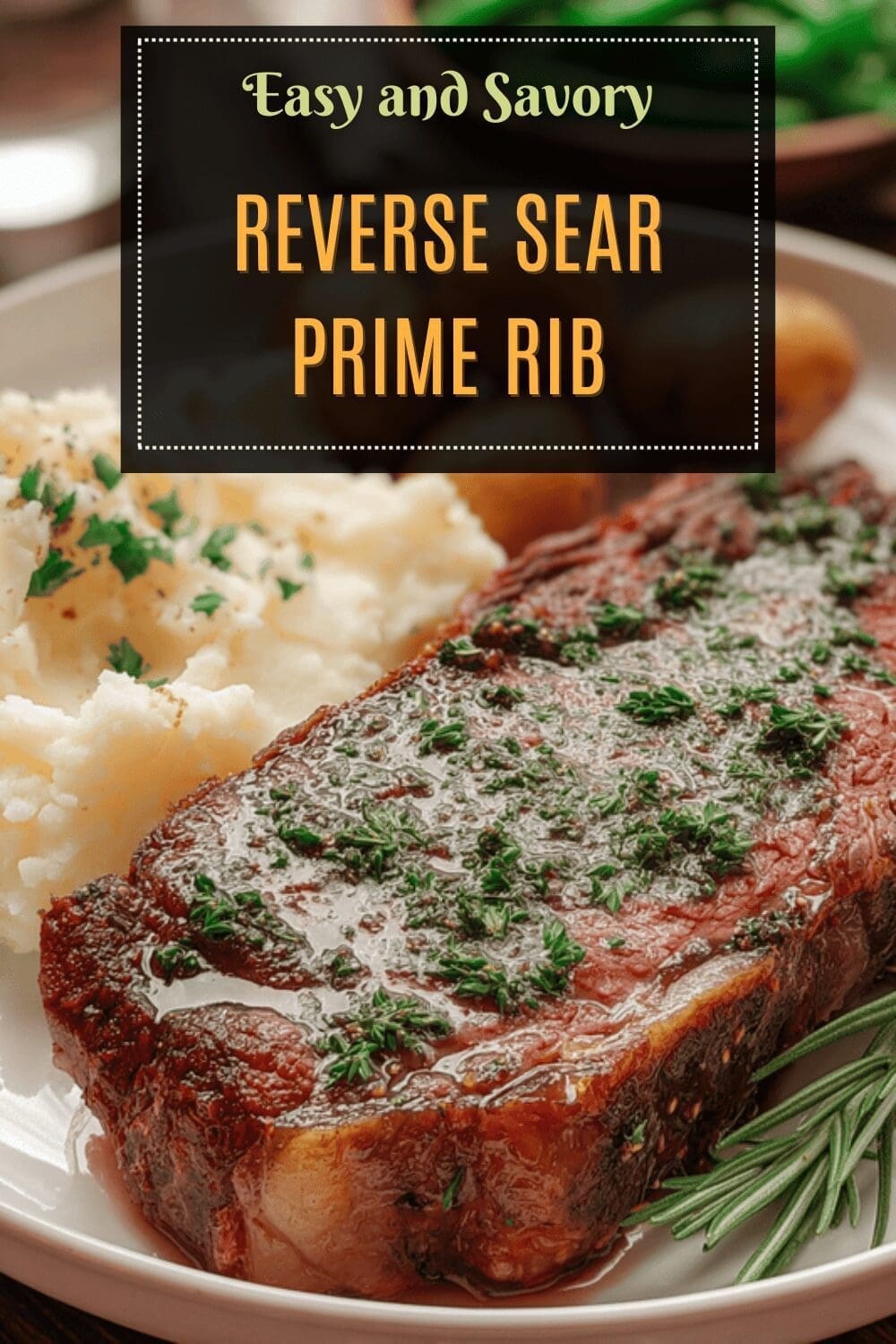
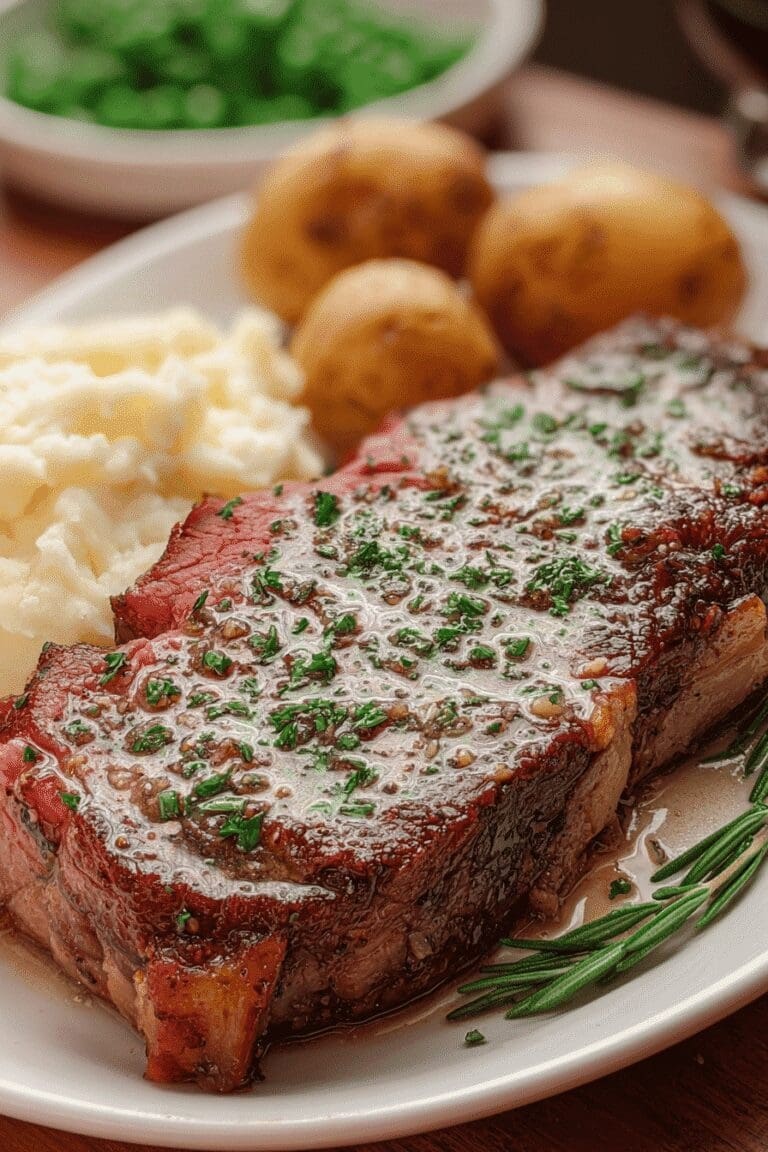
🍖 This Reverse Sear Prime Rib recipe delivers a tender, juicy roast with a beautifully caramelized crust.
🌿 The slow roasting combined with a flavorful herb butter ensures rich taste and perfect medium-rare doneness every time.
- Total Time: 3 hours 55 minutes
- Yield: 8-10 servings
Ingredients
– 10-pound bone-in standing rib roast
– 2 tablespoons kosher salt
– ½ cup butter, softened
– 2 tablespoons finely chopped fresh rosemary
– 2 tablespoons finely chopped fresh thyme
– Freshly cracked black pepper (to taste)
Instructions
1-Getting started with your reverse sear prime rib begins with simple seasoning. Begin by seasoning the roast generously with the 2 tablespoons of kosher salt and cover it loosely with plastic wrap; refrigerate overnight to let the flavors sink in. This step is crucial as it helps the salt penetrate the meat, making it more tender and flavorful.
2-Next, remove the roast from the refrigerator and allow it to come to room temperature for even cooking. Preheat your oven or smoker to 200 degrees F, then in a small bowl, mix the ½ cup of softened butter, 2 tablespoons of finely chopped fresh rosemary, 2 tablespoons of finely chopped fresh thyme, and freshly cracked black pepper to taste. Slather this butter mixture over the roast and place it in a large roasting pan before transferring it to the oven.
3-Roast until the internal temperature reaches 115 degrees F for medium-rare, which takes about 3½ to 4 hours. Once done, remove from the oven, tent with aluminum foil, and rest for about 20 minutes to let the juices settle. Finally, heat a large cast iron skillet over high heat, sear the roast on all sides for 1-2 minutes to form a nice crust, then rest for another 3-5 minutes before removing the ribs and slicing into ½-inch thick pieces to serve.
Last Step:
Please leave a rating and comment letting us know how you liked this recipe! This helps our business to thrive and continue providing free, high-quality recipes for you.Notes
🌡️ Use a leave-in or digital thermometer to monitor internal temperature accurately.
🔥 Aim for 115°F before searing; internal temp will rise a few degrees during searing.
⏳ Rest meat properly before and after searing for juicy and tender results.
- Prep Time: 10 minutes
- Cook Time: 3 hours 45 minutes
- Category: Main Dish
- Method: Reverse sear roasting and pan searing
- Cuisine: American
Nutrition
- Serving Size: 1 serving
- Calories: 897 kcal
- Sugar: 0.004 g
- Sodium: 1044 mg
- Fat: 81 g
- Saturated Fat: 35 g
- Trans Fat: 0.2 g
- Carbohydrates: 0.2 g
- Fiber: 0.1 g
- Protein: 39 g
- Cholesterol: 187 mg