Why You’ll Love This Slow Roasted Salmon
Slow roasted salmon stands out as a simple yet delicious way to enjoy a meal that feels special any day of the week. This method brings out the fish’s natural tenderness and rich flavor without much effort. You’ll find it becomes a go-to option for quick dinners that still pack a punch of taste and nutrition.
One reason to try it is the ease of preparation, as this recipe is straightforward and ideal for busy schedules. With just a few basic steps, you get tender, flavorful results that make cooking feel less like a chore. Plus, it’s adaptable for different tastes and diets, adding to its appeal for everyday meals.
Beyond that, the health perks are a big draw, including plenty of omega-3s and protein that support heart health and energy levels. Whether you’re a parent rushing through the evening or a student needing a quick bite, this dish fits right in. Its versatility lets you pair it with sides like roasted veggies for a complete, balanced plate.
Benefits in Detail
- Ease of preparation: This slow roasted salmon recipe is simple and quick, making it ideal for busy weeknights with minimal steps and a focus on slow roasting for tender, flavorful results without constant attention.
- Health benefits: Packed with omega-3 fatty acids, high-quality protein, and essential vitamins, this slow roasted salmon supports heart health, brain function, and overall wellness as a nutritious choice that promotes a balanced diet.
- Versatility: Adaptable to various dietary needs, this recipe can accommodate gluten-free, low-calorie, or paleo preferences easily, with its mild flavor pairing well with many herbs and side dishes for flexible meal planning.
- Distinctive flavor: The slow roasting process enhances the natural richness of the salmon, creating a moist, flaky texture and a savory, slightly caramelized taste that sets this dish apart from other cooking methods.
To learn more about the health advantages of salmon, check out this guide on salmon nutrition and health benefits.
Jump to:
- Why You’ll Love This Slow Roasted Salmon
- Benefits in Detail
- Essential Ingredients for Slow Roasted Salmon
- How to Prepare the Perfect Slow Roasted Salmon: Step-by-Step Guide
- Step-by-Step Breakdown
- Dietary Substitutions to Customize Your Slow Roasted Salmon
- Mastering Slow Roasted Salmon: Advanced Tips and Variations
- Pro Tips for Success
- How to Store Slow Roasted Salmon: Best Practices
- FAQs: Frequently Asked Questions About Slow Roasted Salmon
- What ingredients do I need to slow roast salmon at home?
- How can I tell when slow roasted salmon is perfectly cooked?
- Can I use different vegetables besides baby potatoes when roasting salmon?
- Do I need to preheat my oven when slow roasting salmon, and at what temperature?
- Should I remove the skin from salmon before slow roasting?
- Slow Roasted Salmon
- Ingredients
- Instructions
- Last Step:
- Notes
- Nutrition
- Did you make this recipe?
Essential Ingredients for Slow Roasted Salmon
Getting the ingredients right is key to making slow roasted salmon that tastes amazing every time. Start with fresh, quality items to build the best flavors. This section lists everything you need, based on a reliable recipe that includes roasted baby potatoes for a full meal.
Here’s the complete list of ingredients with exact measurements, pulled straight from the preparation details. Each one plays a role in creating a dish that’s both tasty and nutritious, so don’t skip anything.
- 1 pound (about 450 grams) of halved baby potatoes
- 1 teaspoon of fresh thyme leaves
- 1 teaspoon of dried rosemary
- 2 minced garlic cloves (for the potatoes)
- 2 tablespoons of olive oil
- Kosher salt, to taste
- Black pepper, to taste
- 1-pound (450 grams) salmon fillet
- 3 to 4 tablespoons of extra virgin olive oil (for the salmon)
- 3 minced garlic cloves (additional for the salmon)
- 3 teaspoons of fresh thyme leaves (additional)
- 1 teaspoon dried rosemary (additional)
- One lemon (for squeezing fresh juice at the end)
For special options, you can make swaps like marinated tofu for a vegan twist or reduce oil for lower calories. These ingredients make it easy to adjust based on what you have on hand or your dietary goals.
How to Prepare the Perfect Slow Roasted Salmon: Step-by-Step Guide
Follow this easy guide to make slow roasted salmon that’s tender and full of flavor. Start by preheating your oven to 450°F (232°C) to get things going right. This method ensures even cooking and helps bring out the best in your ingredients.
In a large bowl, toss 1 pound (about 450 grams) of halved baby potatoes with 1 teaspoon of fresh thyme leaves, 1 teaspoon of dried rosemary, 2 minced garlic cloves, 2 tablespoons of olive oil, kosher salt, and black pepper to taste. Arrange the potatoes cut side down on a sheet pan or baking dish and roast for 25 minutes. While the potatoes cook, season a 1-pound salmon fillet with salt and pepper, then let it rest at room temperature.
After 25 minutes, reduce the oven temperature to 250°F (121°C). Move the potatoes to one side of the pan and brush the pan with olive oil. Place the salmon on the pan and drizzle with 3 to 4 tablespoons of extra virgin olive oil, then spread the remaining 3 minced garlic cloves on top and sprinkle with the remaining 3 teaspoons of fresh thyme leaves and 1 teaspoon dried rosemary.
Step-by-Step Breakdown
First Step: Preheat your oven to 275°F (135°C) and line a baking sheet with parchment paper or foil for easy cleanup.
Second Step: Pat the salmon fillets dry using paper towels to ensure proper browning and brush both sides lightly with olive oil.
Third Step: Season the salmon evenly with sea salt, black pepper, and minced garlic, then place lemon slices on top.
Fourth Step: Arrange the fillets on the prepared baking sheet with some space between each, alongside the roasted potatoes.
Fifth Step: Return the pan to the oven and slow roast for 15 to 18 minutes for medium rare or up to 25 minutes for medium, based on thickness.
Sixth Step: Check doneness by seeing if the salmon flakes easily with a fork or reaches an internal temperature of 125°F (52°C), then finish by squeezing fresh lemon juice from one lemon over the salmon.
Final Step: Remove from oven and let rest for 5 minutes before serving. This approach keeps everything juicy and flavorful, perfect for pairing with roasted veggies. For more fish recipes, try our favorite on air fryer salmon bites, which offers another easy way to cook fish quickly.

Dietary Substitutions to Customize Your Slow Roasted Salmon
Slow roasted salmon is flexible, so you can tweak it for different needs without losing its charm. Start with the basics and swap things as needed to fit your preferences. This makes it a great choice for anyone from busy parents to health-focused folks.
Protein and Main Component Alternatives: For vegetarians and vegans, substitute salmon with marinated tofu or tempeh which offer rich plant-based protein options. White fish varieties like cod or halibut can replace salmon for a lighter taste.
Vegetable, Sauce, and Seasoning Modifications: Swap accompanying vegetables based on seasonal availability, such as asparagus, green beans, or roasted carrots. Use dairy-free sauces like avocado cream or coconut yogurt dressings for lactose intolerance. Adjust seasonings with smoked paprika, dill, or fresh ginger to diversify flavor profiles, catering to different tastes and dietary restrictions.
Remember tips like using a center-cut salmon fillet for even cooking or substituting garlic with shallots if desired. Pairing with crunchy salads or seared vegetables adds great texture to the meal.
Mastering Slow Roasted Salmon: Advanced Tips and Variations
Once you get the hang of slow roasted salmon, you can try some advanced tricks to make it even better. Use a thermometer to track the internal temperature, aiming for 125-130°F for the perfect doneness. This helps avoid overcooking and keeps the fish moist every time.
Flavor variations let you play around with ingredients, like adding a herb crust with parsley, thyme, and lemon zest. You could also try a spicy glaze with honey, chili powder, and soy sauce for an extra kick. Presentation tips include serving on a bed of pureed vegetables or quinoa, topped with microgreens for a nice look.
Make-ahead options are handy for busy days, such as prepping seasonings and lemon slices in advance. For more ideas on fish dishes, check out air fryer cod recipe, which shares similar techniques for simple, tasty meals.
Pro Tips for Success
- Pro cooking techniques: Use a thermometer to precisely monitor salmon’s internal temperature for perfect doneness at 125-130°F and consider sous vide precooking before roasting for ultra-tender texture.
- Flavor variations: Experiment with herb crusts using parsley, thyme, and lemon zest or add a spicy glaze made from honey, chili powder, and soy sauce.
- Presentation tips: Serve the slow roasted salmon on a bed of pureed vegetables or quinoa, garnished with microgreens.
- Make-ahead options: Prepare seasoning mixes and lemon slices ahead of time and partially roast salmon to finish later.
How to Store Slow Roasted Salmon: Best Practices
Proper storage keeps your slow roasted salmon fresh and safe to eat later. Store cooled salmon in airtight containers in the refrigerator for up to 3 days to keep its flavor intact. Freezing works well too, as wrapping it tightly in plastic wrap and foil lets it last up to 2 months.
When reheating, use a low oven at around 275°F or a microwave on low to maintain moisture. For meal prep, portion it into servings before storing so you can grab and go easily. These steps make it simple for anyone, from working professionals to seniors, to enjoy leftovers without hassle.
FAQs: Frequently Asked Questions About Slow Roasted Salmon
What ingredients do I need to slow roast salmon at home?
How can I tell when slow roasted salmon is perfectly cooked?
Can I use different vegetables besides baby potatoes when roasting salmon?
Do I need to preheat my oven when slow roasting salmon, and at what temperature?
Should I remove the skin from salmon before slow roasting?

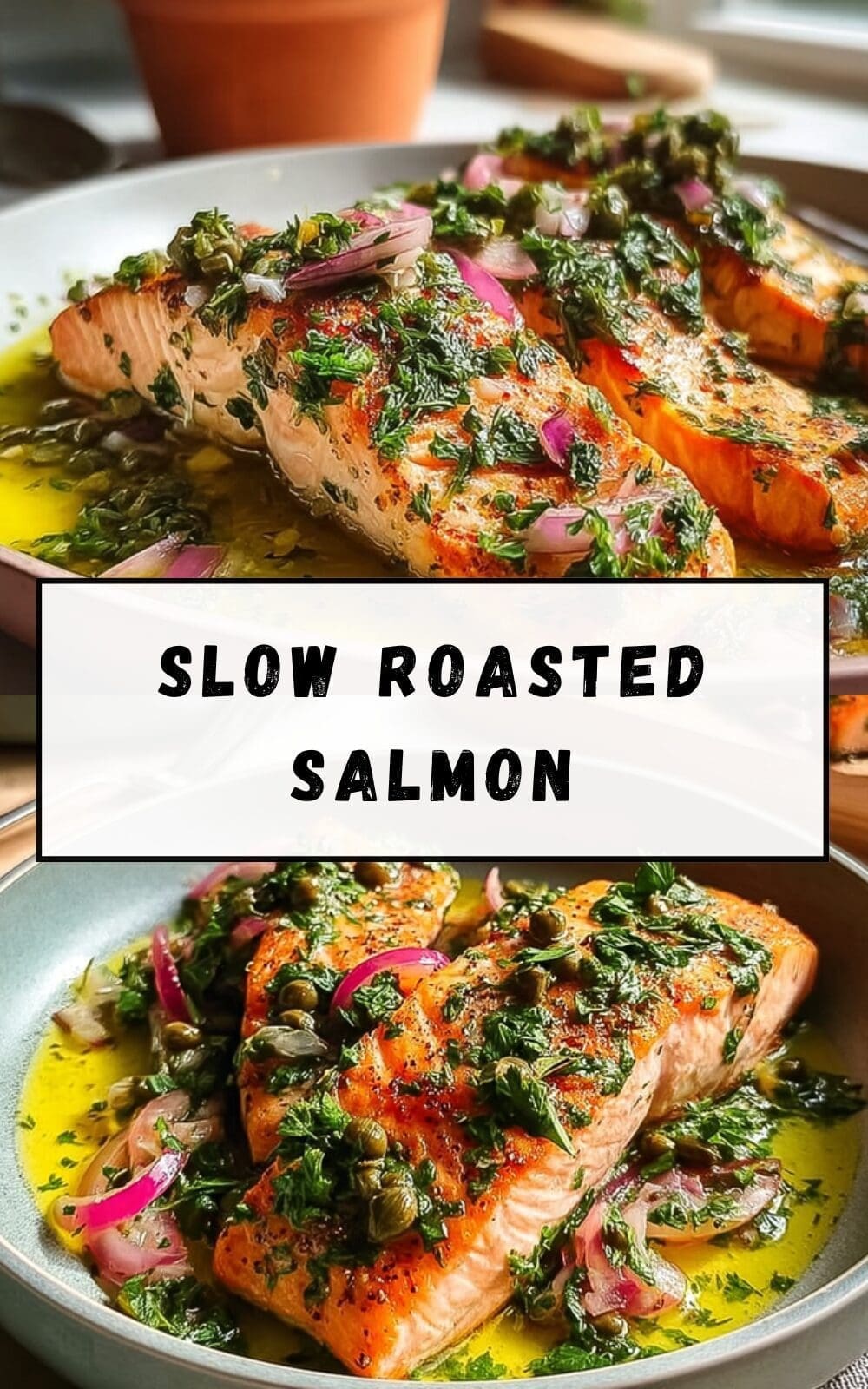
Slow Roasted Salmon
🐟 Slow roasting salmon locks in moisture for tender, flaky fish that’s full of flavor.
🥔 Paired with perfectly roasted baby potatoes, this recipe makes for a balanced and satisfying meal every time.
- Total Time: 50 minutes
- Yield: 4 servings
Ingredients
– 1 pound (about 450 grams) halved baby potatoes
– 1 teaspoon fresh thyme leaves
– 1 teaspoon dried rosemary
– 2 minced garlic cloves for the potatoes
– 2 tablespoons olive oil
– Kosher salt to taste
– Black pepper to taste
– 1 pound (450 grams) salmon fillet
– 3 to 4 tablespoons extra virgin olive oil for the salmon
– 3 minced garlic cloves additional for the salmon
– 3 teaspoons fresh thyme leaves additional
– 1 teaspoon dried rosemary additional
– One lemon for squeezing fresh juice at the end
Instructions
First Step: Preheat your oven to 275°F (135°C) and line a baking sheet with parchment paper or foil for easy cleanup.
Second Step: Pat the salmon fillets dry using paper towels to ensure proper browning and brush both sides lightly with olive oil.
Third Step: Season the salmon evenly with sea salt, black pepper, and minced garlic, then place lemon slices on top.
Fourth Step: Arrange the fillets on the prepared baking sheet with some space between each, alongside the roasted potatoes.
Fifth Step: Return the pan to the oven and slow roast for 15 to 18 minutes for medium rare or up to 25 minutes for medium, based on thickness.
Sixth Step: Check doneness by seeing if the salmon flakes easily with a fork or reaches an internal temperature of 125°F (52°C), then finish by squeezing fresh lemon juice from one lemon over the salmon.
Final Step: Remove from oven and let rest for 5 minutes before serving. This approach keeps everything juicy and flavorful, perfect for pairing with roasted veggies. For more fish recipes, try our favorite on air fryer salmon bites, which offers another easy way to cook fish quickly.
Last Step:
Please leave a rating and comment letting us know how you liked this recipe! This helps our business to thrive and continue providing free, high-quality recipes for you.Notes
🐠 Use a center-cut salmon fillet for even cooking throughout.
🧄 Substitute garlic with shallots or green onions if preferred.
🥗 Pair the dish with crunchy salads or seared vegetables to add texture and freshness.
- Prep Time: 10 minutes
- Cook Time: 40 minutes
- Category: Main Course
- Method: Roasting
- Cuisine: American
- Diet: Pescatarian
Nutrition
- Serving Size: 1 serving
- Calories: 254
- Sugar: 2g
- Sodium: 348mg
- Fat: 10g
- Saturated Fat: 1.1g
- Trans Fat: 0g
- Carbohydrates: 21g
- Fiber: 2.6g
- Protein: 25g
- Cholesterol: 62.4mg