Why You’ll Love This Turkey Stock
Turkey stock is a simple way to turn leftover turkey bones into something truly special for your kitchen. This turkey stock recipe offers ease of preparation, making it ideal for busy home cooks who want flavorful results without much effort. Packed with health benefits, it’s full of nutrients from turkey bones and veggies that support digestion and add minerals to your meals.
Beyond its simplicity, turkey stock shines in versatility, fitting into gluten-free dishes or low-calorie recipes with ease. The deep, rich flavor it brings to soups, stews, and more makes it a standout choice that elevates everyday cooking. Whether you’re a beginner or a seasoned chef, this stock will become a go-to staple in your routine.
- Ease of preparation: This turkey stock recipe is simple and quick to make, requiring minimal ingredients and hands-on time. You can have a rich, flavorful stock ready to use within a couple of hours, perfect for busy cooks.
- Health benefits: Packed with nutrients from turkey bones and vegetables, this stock promotes joint health, supports digestion, and is rich in collagen and minerals, making it a nourishing base for soups and stews.
- Versatility: Ideal for a variety of dietary needs, turkey stock can be used in gluten-free, low-calorie, or paleo cooking. Its adaptable flavor profile makes it a perfect addition to countless recipes.
- Distinctive flavor: Slow simmering of turkey bones and aromatic vegetables creates a deep, rich flavor unique to turkey stock, providing a savory and comforting taste that enhances any dish.
To learn more about how turkey stock fits into everyday meals, check out our guide on simple soup recipes for inspiration.
Jump to:
- Why You’ll Love This Turkey Stock
- Essential Ingredients for Turkey Stock
- How to Prepare the Perfect Turkey Stock: Step-by-Step Guide
- Dietary Substitutions to Customize Your Turkey Stock
- Why These Changes Work
- Mastering Turkey Stock: Advanced Tips and Variations
- Building Confidence in Variations
- How to Store Turkey Stock: Best Practices
- FAQs: Frequently Asked Questions About Turkey Stock
- What ingredients do I need to make homemade turkey stock?
- How long should I simmer turkey stock for the best flavor?
- Can I freeze turkey stock, and how should I store it?
- What are some common ways to use turkey stock in cooking?
- How can I make my turkey stock clearer and less greasy?
- Turkey Stock
- Ingredients
- Instructions
- Last Step:
- Notes
- Nutrition
- Did you make this recipe?
Essential Ingredients for Turkey Stock
Gathering the right ingredients is the first step to making delicious turkey stock at home. This turkey stock recipe uses fresh, everyday items that build a strong base of flavors. Focus on quality to get the best results without complicating things.
In this section, we’ve listed out all the ingredients you need. Remember, using precise measurements helps ensure your stock turns out just right every time. Here’s the complete list pulled directly from the recipe:
- 1 cooked turkey carcass (about 4 pounds) with most of the meat removed
- 2 large yellow onions, peeled and quartered
- 4 medium stalks of celery, coarsely chopped
- 4 large carrots, coarsely chopped
- 1 teaspoon whole black peppercorns (optional)
- A few sprigs fresh parsley or thyme (optional)
- Enough water to cover ingredients, about 1 gallon
Special Dietary Options:
- Vegan: Use mushroom stems, kombu seaweed, and vegetable scraps as plant-based substitutes.
- Gluten-free: All ingredients are naturally gluten-free; avoid adding any gluten-containing seasonings.
- Low-calorie: Use minimal oil (or none) when roasting bones and focus on vegetables to reduce fat content.
| Ingredient | Quantity | Purpose |
|---|---|---|
| Cooked turkey carcass | 1 (about 4 pounds) | Provides the rich, savory foundation |
| Yellow onions | 2 large, peeled and quartered | Enhances aroma and complexity |
| Celery stalks | 4 medium, coarsely chopped | Contributes subtle earthiness |
| Carrots | 4 large, coarsely chopped | Adds sweetness and balance |
| Whole black peppercorns | 1 teaspoon (optional) | Adds mild spiciness |
| Fresh parsley or thyme | A few sprigs (optional) | Imparts herbal undertones |
| Water | About 1 gallon | Serves as the cooking medium |
For more ideas on healthy cooking bases, see our article on veggie stock basics to explore plant-based options.
How to Prepare the Perfect Turkey Stock: Step-by-Step Guide
Making turkey stock at home is straightforward and rewarding. Start by gathering your ingredients to set yourself up for success. This turkey stock recipe walks you through each part, from roasting to simmering, so you end up with a flavorful broth.
First, break the cooked turkey carcass into large chunks and place them in a large stockpot with the onions, celery, carrots, black peppercorns, and fresh herbs if using. Add about 1 gallon of water, or enough to fully cover the ingredients, then bring to a boil over medium-high heat.
- Gather all ingredients and prepare the bones by roasting them in the oven at 400°F for 30 minutes to deepen the flavor.
- Transfer roasted bones to a large stockpot; add chopped vegetables, bay leaves, peppercorns, and cold water.
- Slowly bring to a simmer over medium heat, avoiding boiling to keep the stock clear.
- Skim foam and impurities from the surface during the first 30 minutes of simmering.
- Reduce heat to low and let the stock gently simmer for 4 to 6 hours to extract maximum flavor.
- Strain the stock through a fine mesh sieve, discarding solids, and for clarity, strain again through a coffee filter or cheesecloth.
- Cool the stock promptly by placing the pot in an ice bath to prevent bacterial growth, then store in airtight containers.
- This method can accommodate substitutions like vegetable stock base for vegan options or added herbs for flavor variations; cook for 3 to 3 1/2 hours, allowing the liquid to reduce by about half, as per the recipe details.
Remember, letting it simmer slowly brings out the best taste, just like saving turkey neck bones makes prep easier, as noted in the tips.
Once cooled, keep refrigerated for up to 1 week or freeze for up to 3 months. For nutritional details, here’s a quick overview based on 8 servings: Calories: 4, Fat: 0.1 grams, Saturated fat: 0.0 grams, Carbohydrates: 0.3 grams, Fiber: 0.1 grams, Sugars: 0.1 grams, Protein: 0.4 grams, Sodium: 3 milligrams.

Dietary Substitutions to Customize Your Turkey Stock
Turkey stock is easy to tweak for different needs, making it fun to experiment in the kitchen. Whether you’re avoiding certain foods or want new flavors, these swaps keep things simple and tasty. Start with the base ingredients and adjust as you go for the best results.
Protein and Main Component Alternatives: Substitute turkey bones with chicken, beef, or vegetable bones according to preference; use smoked turkey legs for a deeper smoky flavor; for vegan options, replace bones with a mixture of mushrooms, kombu, and roasted vegetables.
Vegetable, Sauce, and Seasoning Modifications: Swap celery with fennel or leeks for different aromatic notes; use turmeric or ginger for added warmth and health benefits; adjust seasoning with tamari instead of soy sauce to maintain gluten-free standards; incorporate fresh herbs like thyme or rosemary depending on seasonality and taste preferences.
Why These Changes Work
These substitutions help maintain the stock’s core while fitting various diets, like keeping it low-calorie by focusing on veggies. For instance, adding ginger not only boosts flavor but also offers extra health perks, tying into the benefits we discussed earlier.
Mastering Turkey Stock: Advanced Tips and Variations
Taking your turkey stock to the next level involves some handy tricks and creative twists. Pro cooking techniques like using a slow cooker for hands-off preparation or a pressure cooker to cut down time while keeping that richness make a big difference. Once you master the basics, you can play with flavors to suit your mood.
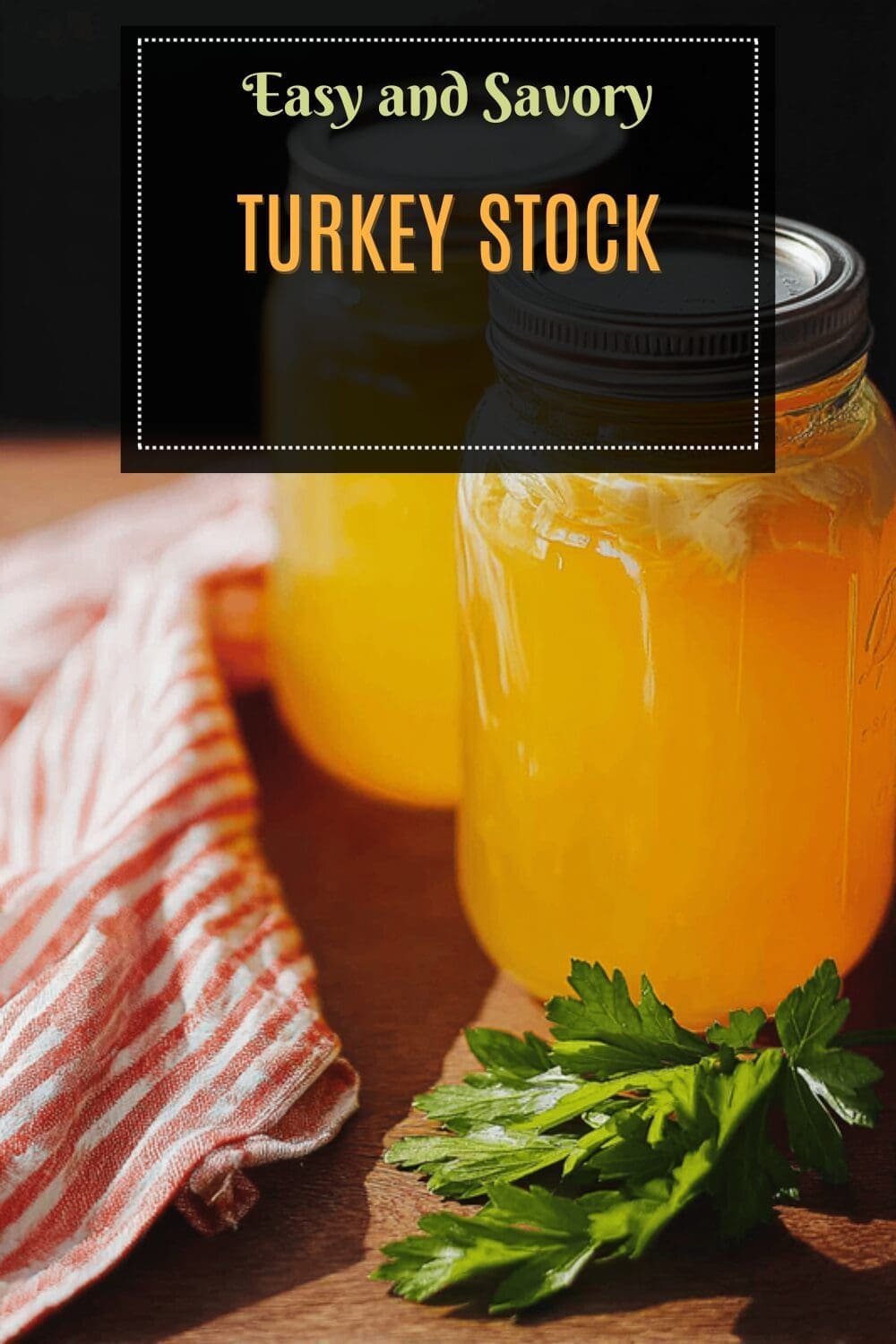
Flavor variations let you experiment with adding dried mushrooms, star anise, or cinnamon sticks for exotic tastes, turning a simple stock into something unique. Presentation tips include using clear glass containers to show off the stock’s rich color and garnishing dishes with fresh herbs like parsley or chives for a nice touch.
Make-ahead options are great for busy days, like preparing large batches and freezing them in ice cube trays or portioned containers. For more on freezing techniques, check out how we handle storage in the next section, as it aligns perfectly with long-term use.
Building Confidence in Variations
Start small with one change at a time to see how it affects the flavor, building your skills over time. Remember, tips like saving the turkey neck bone streamline the process, making it easier to create fresh stock regularly.
How to Store Turkey Stock: Best Practices
Proper storage keeps your turkey stock fresh and ready for use, extending its shelf life without losing quality. Refrigeration helps maintain that homemade flavor, while other methods like freezing offer convenience for meal prep. Follow these steps to avoid waste and keep things straightforward.
Refrigeration: Store turkey stock in airtight containers in the refrigerator for up to 3-4 days to maintain freshness; cool it completely first to prevent any issues, as per the recipe guidelines.
Freezing: Freeze stock in portions using freezer-safe containers or bags; remove air to prevent freezer burn and store up to 3 months, which matches the recipe’s advice for up to 3 months of freezing.
Reheating: Warm gently on the stove over low heat to retain flavor and avoid overcooking; avoid repeated reheating to keep it at its best.
Meal prep considerations: Batch cook turkey stock and freeze in meal-sized servings for convenient recipe prep throughout the week, tying into the make-ahead tips from earlier.
FAQs: Frequently Asked Questions About Turkey Stock
What ingredients do I need to make homemade turkey stock?
How long should I simmer turkey stock for the best flavor?
Can I freeze turkey stock, and how should I store it?
What are some common ways to use turkey stock in cooking?
How can I make my turkey stock clearer and less greasy?

Turkey Stock
🦃 Make a rich and flavorful turkey stock using simple steps that maximize taste from leftover turkey bones.
🍲 This homemade stock is perfect for soups, stews, and sauces, offering deep savory notes and great nutrition.
- Total Time: 3 hours 40 minutes
- Yield: About 8 servings 1x
Ingredients
1 (about 4 pounds) cooked turkey carcass provides the rich, savory foundation
2 large, peeled and quartered yellow onions enhances aroma and complexity
4 medium, coarsely chopped celery stalks contributes subtle earthiness
4 large, coarsely chopped carrots adds sweetness and balance
1 teaspoon (optional) whole black peppercorns adds mild spiciness
A few sprigs (optional) fresh parsley or thyme imparts herbal undertones
About 1 gallon water serves as the cooking medium
Instructions
1-Gather all ingredients: gather all ingredients and prepare the bones by roasting them in the oven at 400°F for 30 minutes to deepen the flavor.
2-Transfer: Transfer roasted bones to a large stockpot; add chopped vegetables, bay leaves, peppercorns, and cold water.
3-Simmer: Slowly bring to a simmer over medium heat, avoiding boiling to keep the stock clear.
4-Skim: Skim foam and impurities from the surface during the first 30 minutes of simmering.
5-Simmer gently: Reduce heat to low and let the stock gently simmer for 4 to 6 hours to extract maximum flavor.
6-Strain: Strain the stock through a fine mesh sieve, discarding solids, and for clarity, strain again through a coffee filter or cheesecloth.
7-Cool: Cool the stock promptly by placing the pot in an ice bath to prevent bacterial growth, then store in airtight containers.
8-Variations: This method can accommodate substitutions like vegetable stock base for vegan options or added herbs for flavor variations; cook for 3 to 3 1/2 hours, allowing the liquid to reduce by about half, as per the recipe details.
Last Step:
Please leave a rating and comment letting us know how you liked this recipe! This helps our business to thrive and continue providing free, high-quality recipes for you.Notes
🦴 Save turkey neck bones and chopped vegetables while cooking turkey to streamline stock making.
🍲 Use turkey stock interchangeably with chicken or vegetable stock in recipes.
🌟 Multiple strainings improve the stock’s clarity and freshness.
- Prep Time: 10 minutes
- Simmering Time: 3 hours 30 minutes
- Cook Time: 3 hours 30 minutes
- Category: Broth
- Method: Simmering
- Cuisine: American
- Diet: Low-Calorie
Nutrition
- Serving Size: 1/2 cup
- Calories: 4
- Sugar: 0.1 grams
- Sodium: 3 mg
- Fat: 0.1 grams
- Saturated Fat: 0 grams
- Carbohydrates: 0.3 grams
- Fiber: 0.1 grams
- Protein: 0.4 grams
- Cholesterol: 0 mg