Why you’ll love this Banh Canh Cua
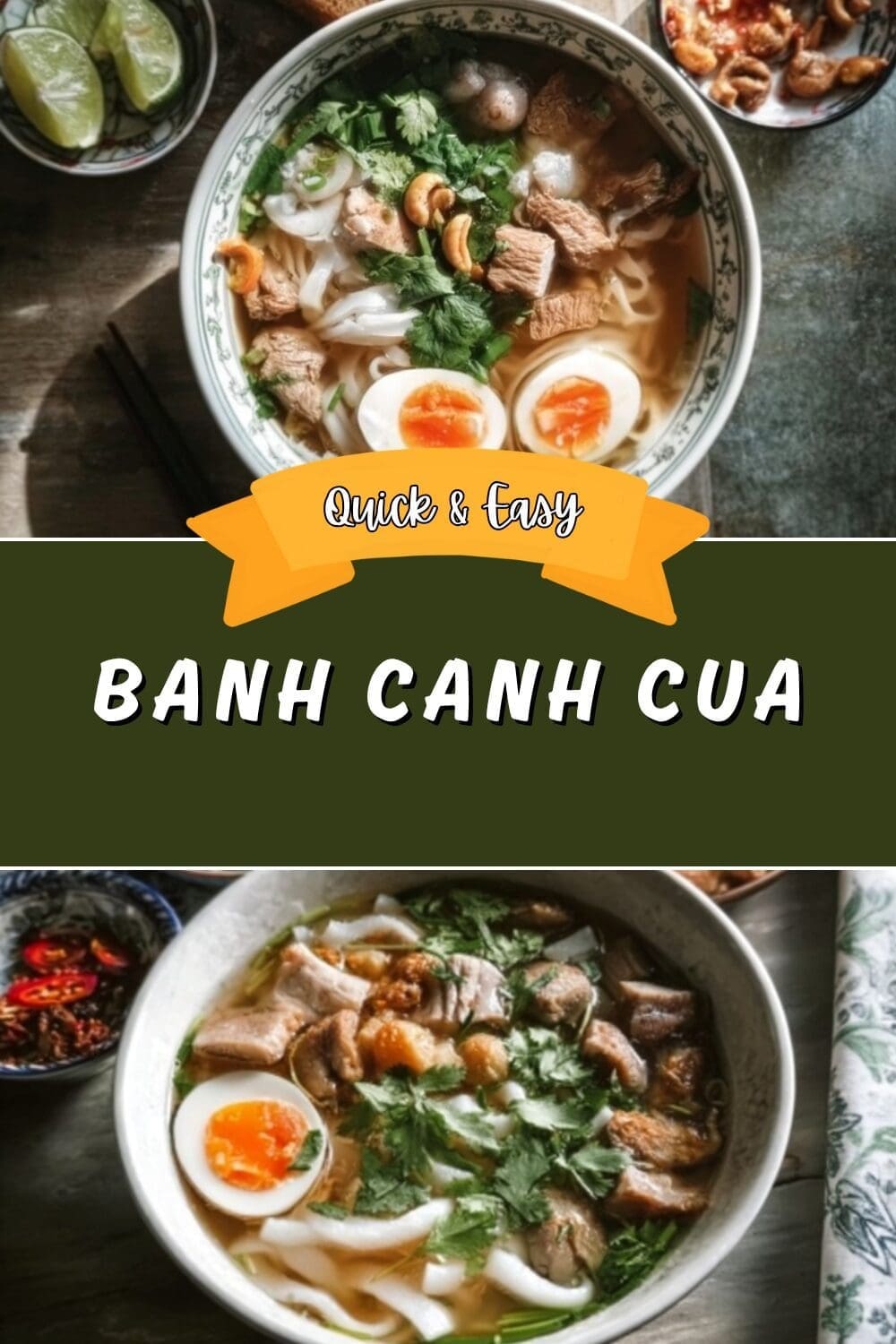
Banh Canh Cua is a Vietnamese crab tapioca noodle soup with thick, chewy tapioca noodles in a rich seafood broth flavored by fresh crab. It tastes bold but still comforting, thanks to herbs, crispy onions, and a bright squeeze of lime.
- Ease of preparation: Once your broth is simmering, the rest comes together step by step without complicated techniques.
- Health and nutrition: The dish delivers protein from crab and prawns, plus minerals like potassium and iron. (See nutrition per serving below.)
- Versatility: You can swap pork hoc for other pork cuts, adjust seasoning to taste, and customize toppings like adding or skipping blood jelly.
- Distinctive flavor: Whole crab gives natural sweetness, while chargrilled dried squid and dehydrated scallops add deep umami.
Pro tip: Serve it right away so the noodles stay springy and glossy, not mushy.
Jump to:
- Why you’ll love this Banh Canh Cua
- Essential ingredients for Banh Canh Cua
- Broth (seafood base and seasoning)
- Toppings and add-ons
- Prawn balls (springy, crispy bites)
- Noodles and garnish
- Special dietary options
- How to prepare the perfect Banh Canh Cua: step-by-step guide
- Plan your timing first
- Broth preparation
- Prawn balls and crab
- Noodles and garnish
- Noodle success tips (so they don’t clump)
- Dietary substitutions to customize your Banh Canh Cua
- Protein and main component alternatives
- Vegetable, sauce, and seasoning modifications
- Mastering Banh Canh Cua: advanced tips and variations
- Pro cooking techniques
- Flavor variations and presentation ideas
- Make-ahead options for busy schedules
- How to store Banh Canh Cua: best practices
- Refrigeration
- Freezing
- Reheating
- Meal prep considerations
- FAQs: frequently asked questions about Banh Canh Cua
- What is banh canh cua?
- What is the best crab to use for banh canh cua?
- How do I prevent banh canh noodles from sticking together?
- What can I substitute for potato starch in banh canh cua noodles?
- How long does it take to cook banh canh cua from scratch?
- Banh Canh Cua
- Ingredients
- Notes
- Nutrition
- Did you make this recipe?
Essential ingredients for Banh Canh Cua
Below is the full ingredient list for a traditional, crab-forward banh canh cua recipe. Use it as your checklist before you start cooking.
Broth (seafood base and seasoning)
- 10 liters stock – forms the main soup base
- 800 grams peeled daikon – adds sweetness and body when simmered until soft
- 400 grams peeled jicama – contributes a mild crunchiness that turns tender in broth
- 30 grams dried squid – chargrilled for umami depth
- 70 grams dehydrated scallops – boosts natural seafood sweetness and savoriness
- 500 grams frozen crab meat – provides the main crab flavor in the soup
- 2 tablespoons annatto seeds – colors the broth with a warm red hue
- 1 tablespoon oil (for annatto seeds) – used to bloom annatto flavor and color
- 70 grams rock sugar (adjust to taste) – balances salt with natural sweetness
- 6 tablespoons salt (adjust to taste) – core seasoning for the broth
- 1/2 cup fish sauce – adds savory umami
- 1 1/2 tablespoons chicken bouillon powder – rounds out flavor and boosts taste
- 1/2 cup potato starch (for slurry) – thickens the broth to a banh canh texture
- 1/4 cup water (for slurry) – helps dissolve starch for smooth thickening
Toppings and add-ons
- 1 pork hoc, cut into smaller pieces (or preferred cut) – adds pork richness and savory bites
- 1 or more crabs (mud crab preferred, claws easier to prep) – adds fresh crab sweetness and aroma
- Optional blood jelly – optional texture and traditional topping
Prawn balls (springy, crispy bites)
- 20 fresh peeled and deveined prawns – forms the prawn balls
- 1 finely chopped red shallot – adds mild sharpness and fragrance
- 3 finely chopped garlic cloves – deep savory flavor
- 1 finely chopped spring onion sprig – fresh, green aroma
- 1 tablespoon oil (for frying aromatics) – to brown aromatics before blending
- 1/4 teaspoon salt – basic seasoning
- 1/2 teaspoon sugar – balances seasoning and improves taste
- 1 teaspoon chicken bouillon powder – savory boost
- 1/2 teaspoon pepper – gentle heat and aroma
- 1/2 teaspoon fish sauce – extra umami
- Cooking oil for frying – for frying prawn balls until golden
Noodles and garnish
- 2 kilograms Banh Canh tapioca noodles (cooked) – chewy base for the soup
- Finely chopped coriander – herbal, citrusy lift
- Finely chopped spring onion – fresh onion bite
- Fried onions – crispy topping and aroma
- Pepper – quick seasoning at the table
- Lime juice – bright acidity to balance seafood richness
Special dietary options
Traditional banh canh cua is not vegan, but you can still adapt portions for your needs. Keep in mind that the broth uses fish sauce, chicken bouillon powder, crab, and dried seafood for authentic flavor.
- Vegan: Replace crab and prawn balls with plant-based seafood-style pieces, and use vegetable stock instead of the 10 liters stock. Substitute fish sauce and chicken bouillon with vegan umami boosters (soy sauce or vegan fish sauce) and use mushroom-based toppings. The result will be different, but still comforting.
- Gluten-free: Choose certified gluten-free bouillon powder and fish sauce, and confirm your tapioca noodles are gluten-free.
- Low-calorie: Keep portions smaller, add extra herbs and vegetables, and reduce the amount of rock sugar and fried onions. You can also limit prawn balls or bake them instead of frying for less oil.
How to prepare the perfect Banh Canh Cua: step-by-step guide
Banh Canh Cua Vietnamese crab soup is all about building flavor in layers. Start with a gentle, patient broth, then prepare springy prawn balls, and finally assemble with noodles and herbs. The goal is a thick, fragrant seafood broth that coats the thick tapioca noodles.
Plan your timing first
| Stage | What you’re doing | Timing | Key focus |
|---|---|---|---|
| Prep | Chop aromatics and measure ingredients | 40 minutes | Keep everything ready before simmering |
| Pork hoc + broth base | Simmer stock with pork and chargrilled dried squid | ~2 hours simmer time | Gentle simmer for clean flavor |
| Vegetable softening | Cook daikon, jicama, and dehydrated scallops | ~40 minutes | Cook until soft and tender |
| Prawn balls + crab | Fry prawn balls, poach crab in soup | ~30 to 40 minutes | Golden balls and cooked crab flesh |
| Noodles and serve | Boil noodles and assemble bowls | 15 to 20 minutes | Serve hot with herbs and lime |
Broth preparation
First, you build a broth that tastes naturally sweet and deeply savory. Banh Canh Cua gets its signature character from whole crab sweetness, plus umami from chargrilled dried squid and dehydrated scallops.
- Cook pork hoc in stock over low to medium heat.
- Bring broth to a gentle simmer. Chargrill dried squid and add to broth.
- Chop jicama and daikon into large chunks.
- Increase heat slightly and add vegetables. Add jicama, daikon, and dehydrated scallops. Cook about 40 minutes or until soft.
- Remove pork hoc. If it is boneless, slice thinly for topping.
- Color the broth with annatto. Heat 1 tablespoon oil on low, add annatto seeds until oil changes color to red, then strain the oil into the broth.
- Season the broth. Stir in salt, rock sugar, fish sauce, and chicken bouillon powder.
Prawn balls and crab
Next, you make the prawn balls that bring a crisp exterior and springy bite. Then you poach crab so the soup absorbs a finishing layer of freshness.
- Brown aromatics. Brown garlic, red shallots, and spring onions in 1 tablespoon oil, then let them cool.
- Blend into a paste. Blend fried aromatics with seasonings and prawns.
- Shape and fry. Form paste into about 2 cm balls, then fry on medium-high for 5 minutes per side until golden.
- Simmer with crab meat. Add prawn balls and frozen crab meat to the simmering broth.
- Cook fresh crab. Cut crab and cook in soup for 15 minutes or until flesh is done. Remove and set aside.
- Thicken the broth. Mix starch slurry (potato starch with water) and add slowly on low heat, stirring until thickened.
Texture matters: The starch slurry is what gives banh canh cua its signature thick, silky mouthfeel. Add it slowly and keep the heat low while stirring.
Noodles and garnish
Finally, cook and drain tapioca noodles correctly, assemble each bowl, and finish with herbs, fried onions, pepper, and lime juice.
- Boil water and cook tapioca noodles 3 to 5 minutes.
- Strain and drain the noodles.
- Assemble bowls. Place noodles in bowls, add pork hoc, prawn balls, crab, and optional blood jelly.
- Pour hot broth over everything.
- Garnish. Top with coriander, spring onion, fried onions, pepper, and lime juice.
Noodle success tips (so they don’t clump)
- After cooking, immediately rinse under cold water to remove excess starch.
- Drain well, then drizzle with vegetable oil so strands stay separate.
- If you are holding noodles, keep them separate and assemble close to serving time.

Dietary substitutions to customize your Banh Canh Cua
Not every kitchen has the same ingredients or the same dietary needs. The good news is you can make smart substitutions while still protecting the core flavor of banh canh cua.
Protein and main component alternatives
- Swap crab: If fresh mud crab is hard to find, use a quality mix of crab meat from a seafood market. For a lighter version, you can reduce crab and add more vegetables.
- Swap pork hoc: Use any pork cut you prefer (shoulder, ribs, or belly). Cook until tender in the stock, then slice for topping.
- Swap prawn balls: If you can’t find prawns, use another firm seafood like scallops or white fish in the paste. Keep the ball size around 2 cm for even frying.
Vegetable, sauce, and seasoning modifications
- Vegetable swaps: Replace daikon or jicama with similar root vegetables like turnip. Keep chunks large so they soften without dissolving.
- Lower-sodium approach: Reduce the salt and rock sugar slightly, then adjust at the end. Add lime juice to boost flavor without more sodium.
- Ingredient sourcing: Tapioca noodles, dried squid, scallops, coriander, and spring onions are usually easiest at an Asian grocery store.
If you want a quick idea for another savory, family-style dish, you might also like this breakfast strata recipe for meal-prep friendly cooking.
Mastering Banh Canh Cua: advanced tips and variations
Once you nail the basics, you can take your banh canh cua recipe from “tasty” to “everyone asks for seconds.” These tips focus on texture, aroma, and timing.
Pro cooking techniques
- Use fresh crab when possible: Fresh crab creates natural sweetness and richer flavor compared to frozen.
- Chargrill for deeper umami: Chargrill dried squid until blackened edges appear, then add to broth.
- Slap the prawn paste: Before frying, slap the paste against a hard surface multiple times. This helps the prawn balls stay springier.
- Thicken gently: Keep the heat low when adding potato starch slurry so it dissolves smoothly.
Flavor variations and presentation ideas
- More lime, less heat: If you like brightness, add extra lime juice at the table and go lighter on pepper.
- Crispy topping upgrade: Add more fried onions right before serving so they stay crunchy.
- Herb mix: Use coriander and spring onion generously. The herbs cut through the rich seafood broth.
Make-ahead options for busy schedules
- Make broth ahead: You can simmer the broth earlier, then reheat gently. This makes assembly faster when you have guests.
- Prep toppings early: Fry prawn balls and chop herbs in advance. Store separately so everything stays fresh.
- Cook noodles just before serving: Noodles taste best when freshly cooked and served hot.
Flavor note: The broth’s natural sweetness comes from whole crab flavor, while the umami foundation is built from chargrilled dried squid and dehydrated scallops.
If you enjoy batch cooking and prefer a make-ahead breakfast style, check out this slow cooker breakfast casserole for another hands-off option.
How to store Banh Canh Cua: best practices
Proper storage helps keep the noodles from becoming mushy and the seafood from tasting dull. Aim to store components separately when possible.
Refrigeration
- Cool leftovers quickly and refrigerate within 2 hours.
- Store in airtight containers and eat within 2 to 3 days.
- For best texture, keep noodles separate from broth and toppings.
Freezing
- Freeze broth and crab meat separately if you can.
- For the best quality, avoid freezing fried prawn balls with the broth, because the coating may soften.
- Thaw in the refrigerator overnight before reheating.
Reheating
- Reheat broth gently until steaming.
- Warm noodles by dunking in hot broth briefly instead of boiling hard.
- Re-crisp prawn balls in a hot pan or oven if needed.
Meal prep considerations
Batch cooking works well here because broth reheats beautifully. Chop herbs and portion fried onions ahead, then assemble fresh bowls for the best experience.
FAQs: frequently asked questions about Banh Canh Cua
What is banh canh cua?
What is the best crab to use for banh canh cua?
How do I prevent banh canh noodles from sticking together?
What can I substitute for potato starch in banh canh cua noodles?
How long does it take to cook banh canh cua from scratch?

Banh Canh Cua
🦀 Savor the rich, natural sweetness of fresh crab in a hearty Vietnamese tapioca noodle soup that warms the soul with its umami-packed broth.
🍜 Thick noodles, crispy prawn balls, and fresh herbs make this dish a must-try for authentic Southeast Asian comfort food lovers.
- Total Time: 6 hours 10 minutes
- Yield: 10 servings
Ingredients
Notes
🦀 Use fresh crab instead of frozen for superior natural sweetness and richer flavor.
👋 Slap the prawn paste against a hard surface multiple times before frying to get a springier texture.
🥢 Drizzle the cooked tapioca noodles with vegetable oil after draining to prevent them from sticking together.
- Prep Time: 40 minutes
- Stock Cooking Time: 3 hours 30 minutes
- Cook Time: 2 hours
- Category: Soup
- Method: Simmering
- Cuisine: Vietnamese
Nutrition
- Serving Size: 1 bowl
- Calories: 1356 kcal
- Sugar: 19 g
- Sodium: 7061 mg
- Fat: 20 g
- Saturated Fat: 5 g
- Unsaturated Fat: 15 g
- Trans Fat: 0 g
- Carbohydrates: 224 g
- Fiber: 3 g
- Protein: 62 g
- Cholesterol: 215 mg