Why You’ll Love This Roasted Spring Vegetables
- Ease of preparation: This Roasted Spring Vegetables recipe is a simple sheet-pan process. You quarter potatoes, break cauliflower into florets, slice leeks and asparagus, then toss everything with oil, salt, and pepper. Most of the work happens in the oven.
- Health benefits: You get a plate full of fiber-rich vegetables plus bright, natural flavor. Asparagus brings nutrients with very few calories, while potatoes add heartiness without feeling heavy when roasted properly.
- Versatility: It works for different eating styles and meal plans. You can keep it vegan and gluten-free as written, or pair it with protein for a complete dinner.
- Distinctive flavor: Roasting creates caramelized edges and tender centers. A few thin lemon slices add a fresh, juicy finish that makes the whole dish taste like spring.
Tip you will notice right away: roast denser veggies first, then add asparagus later so everything finishes with the right texture.
Jump to:
- Why You’ll Love This Roasted Spring Vegetables
- Essential Ingredients for Roasted Spring Vegetables
- Ingredients
- Special Dietary Options
- How to Prepare the Perfect Roasted Spring Vegetables: Step-by-Step Guide
- What you are aiming for
- Roast temperature and timing
- Step-by-step instructions
- Quick cooking checklist
- Dietary Substitutions to Customize Your Roasted Spring Vegetables
- Protein and main component alternatives
- Vegetable, sauce, and seasoning modifications
- Mastering Roasted Spring Vegetables: Advanced Tips and Variations
- Pro cooking techniques
- Flavor variations
- Presentation tips
- Make-ahead options
- How to Store Roasted Spring Vegetables: Best Practices
- Refrigeration
- Freezing
- Reheating
- Meal prep considerations
- FAQs: Frequently Asked Questions About Roasted Spring Vegetables
- What vegetables are best for roasted spring vegetables?
- How long and at what temperature do you roast spring vegetables?
- Can you mix different vegetables when roasting spring veggies?
- How do you store and reheat leftover roasted spring vegetables?
- Can you add protein like chicken to roasted spring vegetables?
- Roasted Spring Vegetables
- Ingredients
- Instructions
- Last Step:
- Notes
- Nutrition
- Did you make this recipe?
Essential Ingredients for Roasted Spring Vegetables
Here are all the ingredients you need for this Spring Roasted Vegetables recipe, with exact amounts.
Ingredients
- 1 1/2 pounds new potatoes, quartered
- 4 cups cauliflower, broken into florets
- 2 large leeks (about 1 1/2 cups chopped), cut into half moons
- 1-2 tablespoons avocado oil or olive oil
- Sea salt to taste
- Black pepper to taste
- 1 pound asparagus, ends trimmed and cut into 2-inch pieces
- 1 lemon, thinly sliced
- Optional: fresh herbs such as Italian parsley, fresh dill, spring onions, or fresh thyme for garnish
Special Dietary Options
- Vegan: This recipe is naturally vegan if you choose avocado oil or olive oil and skip any cheese or meat add-ons.
- Gluten-free: It is gluten-free by default since there are no grains or flour-based ingredients.
- Low-calorie: Use 1 tablespoon oil instead of 2 and keep your lemon slices generous for big flavor with less added fat.
If you love easy side dishes that pair with hearty meals, you might also enjoy this steak frites recipe for a main that contrasts beautifully with roasted vegetables.
External reference for nutrition: If you are curious about the health angle of key ingredients, see Healthline asparagus benefits and UCDavis potato health benefits.
How to Prepare the Perfect Roasted Spring Vegetables: Step-by-Step Guide
This is the kind of recipe that helps busy days feel special. Roasting brings out natural sweetness in potatoes and cauliflower, softens leeks into something savory and comforting, and gives asparagus a lightly charred edge.
What you are aiming for
- Potatoes: fork-tender inside with browned edges
- Cauliflower: golden florets without mushiness
- Leeks: soft and slightly caramelized
- Asparagus: bright green, tender-crisp, not overcooked
Roast temperature and timing
Preheat your oven to 425°F. You will roast denser vegetables first, then add asparagus and lemon slices partway through.
Step-by-step instructions
First Step: Preheat the oven to 425°F. Line a sheet pan with parchment paper for easier cleanup. When you are ready, gather your vegetables and cut them to similar sizes so they roast evenly.
Second Step: Prep the potatoes, cauliflower, and leeks. Quarter 1 1/2 pounds new potatoes. Break 4 cups cauliflower into florets. Cut 2 large leeks into half moons, aiming for about 1 1/2 cups chopped.
Third Step: Toss the first batch. Add the potatoes, cauliflower, and leeks to your sheet pan. Drizzle with 1-2 tablespoons avocado oil or olive oil, then season with sea salt to taste and black pepper to taste. Toss until everything looks glossy and evenly coated.
Fourth Step: Roast for the first phase. Put the pan in the oven for 25 minutes. About halfway through, shake the pan or use tongs to flip the vegetables so they brown evenly.
Fifth Step: Add asparagus and lemon. While the first roast phase is happening, trim the asparagus and cut it into 2-inch pieces. When the timer hits 25 minutes, carefully remove the pan and add the asparagus. Place 1 lemon, thinly sliced over the vegetables (you can spread slices across the top).
Sixth Step: Finish roasting. Return the pan to the oven for 10 more minutes. You are looking for fork-tender potatoes, lightly browned cauliflower, and asparagus that is tender-crisp with a little color.
Final Step: Rest, garnish, and serve. Let the vegetables rest for 5 minutes before serving. If you are using fresh herbs like Italian parsley, fresh dill, spring onions, or fresh thyme, sprinkle them on top right before you serve.
Quick cooking checklist
| Vegetable | When to add | Doneness cues |
|---|---|---|
| New potatoes | Start | Soft inside, browned edges |
| Cauliflower florets | Start | Golden and tender, not watery |
| Leeks | Start | Soft, sweet, slightly caramelized |
| Asparagus | After 25 minutes | Bright green, fork-tender |
| Lemon slices | After 25 minutes | Juicy and fragrant |
If your pan is crowded, use a second sheet pan. Crowding traps steam, and you lose that roasted, caramelized flavor.
For another easy main that complements seasonal sides, you can pair this with mango chicken for sweet and savory balance.

Dietary Substitutions to Customize Your Roasted Spring Vegetables
This recipe is already friendly to many diets. Still, you may want changes based on what you have in your kitchen or what your family prefers.
Protein and main component alternatives
If you want to turn Roasted Spring Vegetables into a full meal, you can add protein on the side of the same sheet pan.
- Chicken: Add thin pieces of chicken breast or pre-cooked shredded chicken toward the last stage so the veggies do not overcook.
- Tofu: Use pressed and lightly cubed tofu. Roast it separately if it is not browning as quickly as you want.
- Shrimp: Add shrimp near the end for quick cooking and no rubbery texture.
- Beans: Stir in chickpeas or white beans after roasting for extra fiber and a hearty feel.
Vegetable, sauce, and seasoning modifications
Roasting times vary by vegetable, so the best approach is to keep the “start” and “add later” idea.
- Swap cauliflower: Use broccoli, broccolini, Brussels sprouts, or snap peas. Start the denser ones with the potatoes and add quick-cook ones later.
- Swap leeks: Use thinly sliced yellow onion or shallots if leeks are not available.
- Seasoning ideas: Keep salt and pepper, then add dried thyme or garlic powder. Finish with lemon zest if you want more citrus punch.
- Sauce option: If serving for meal prep, drizzle a light vinaigrette after roasting so the veggies stay crisp.
Mastering Roasted Spring Vegetables: Advanced Tips and Variations
Once you nail the timing, this dish is a great base for different flavor moods. Small changes can make the same vegetables taste completely new.
Pro cooking techniques
- Cut for even roasting: Aim for similar sizes. Big potato chunks take longer, while thin pieces can burn.
- Use high heat: 425°F helps you get browning without drying out too much.
- Toss midway when possible: Shaking the pan improves surface contact with the hot pan.
- Let it rest: A 5-minute rest helps flavors settle and steam redistribute.
Flavor variations
- Citrus-herb: Add extra lemon slices and finish with fresh dill or parsley.
- Garlic-forward: Mix garlic powder into the oil before roasting.
- Smoky twist: Add a pinch of smoked paprika along with salt and pepper.
Presentation tips
- Serve straight from the sheet pan for a casual family vibe.
- For a more “host” look, arrange asparagus on top in a neat layer and place lemon slices like garnish.
Make-ahead options
You can prep everything ahead to make weeknights easier. Chop potatoes, break cauliflower, slice leeks, and trim asparagus earlier in the day. Store them in airtight containers in the fridge, then roast when you are ready to eat.
Small truth: The vegetables taste best the day you roast them, but leftovers still reheat well (see storage tips below).
How to Store Roasted Spring Vegetables: Best Practices
Leftovers are a win because roasted flavors develop even more after cooling. Use smart storage so you keep texture and taste.
Refrigeration
- Cool the vegetables completely.
- Store in an airtight container in the fridge for up to 5 days.
Freezing
- Freeze in freezer bags for up to 3 months.
- For best results, thaw overnight in the fridge before reheating.
Reheating
- Reheat in a 425°F oven on a parchment-lined baking sheet.
- Heat for 10 to 15 minutes, stirring once, until hot.
- Try not to microwave if you want crisp edges.
Serving ideas: toss leftovers into a salad, fold into grain bowls, or add to an omelet for a quick breakfast.
Meal prep considerations
If you plan to eat them over a few days, store any lemony herb garnish separately and add fresh herbs just before serving. This keeps the herbs bright and prevents them from wilting in storage.
FAQs: Frequently Asked Questions About Roasted Spring Vegetables
What vegetables are best for roasted spring vegetables?
How long and at what temperature do you roast spring vegetables?
Can you mix different vegetables when roasting spring veggies?
How do you store and reheat leftover roasted spring vegetables?
Can you add protein like chicken to roasted spring vegetables?
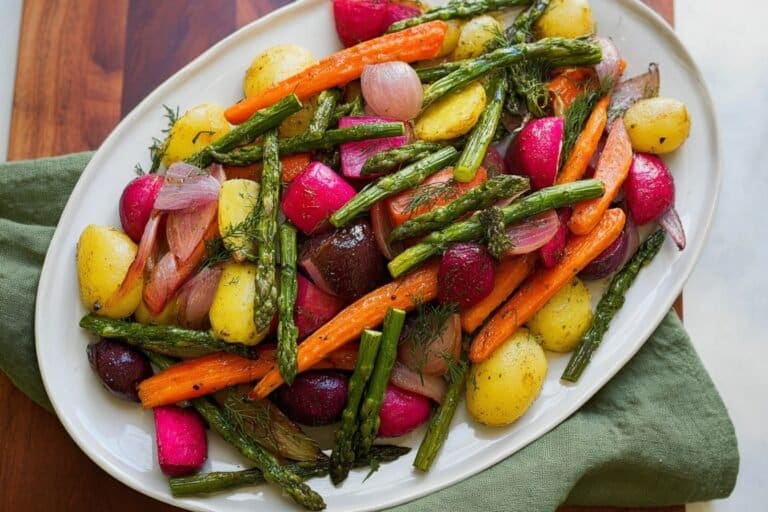
Roasted Spring Vegetables
🌱🥔 Colorful spring roasted vegetables caramelized to perfection – nutrient-packed side bursting with fresh flavors!
🍋 Sheet pan simplicity yields healthy, vibrant dish ready in 45 minutes for any meal.
- Total Time: 45 minutes
- Yield: 6 servings
Ingredients
– 1 1/2 pounds new potatoes, quartered
– 4 cups cauliflower, broken into florets
– 2 large leeks (about 1 1/2 cups chopped), cut into half moons
– 1-2 tablespoons avocado oil or olive oil
– Sea salt to taste
– Black pepper to taste
– 1 pound asparagus, ends trimmed and cut into 2-inch pieces
– 1 lemon, thinly sliced
– Optional: fresh herbs such as Italian parsley, fresh dill, spring onions, or fresh thyme for garnish
Instructions
1-First Step: Preheat the oven to 425°F. Line a sheet pan with parchment paper for easier cleanup. When you are ready, gather your vegetables and cut them to similar sizes so they roast evenly.
2-Second Step: Prep the potatoes, cauliflower, and leeks. Quarter 1 1/2 pounds new potatoes. Break 4 cups cauliflower into florets. Cut 2 large leeks into half moons, aiming for about 1 1/2 cups chopped.
3-Third Step: Toss the first batch. Add the potatoes, cauliflower, and leeks to your sheet pan. Drizzle with 1-2 tablespoons avocado oil or olive oil, then season with sea salt to taste and black pepper to taste. Toss until everything looks glossy and evenly coated.
4-Fourth Step: Roast for the first phase. Put the pan in the oven for 25 minutes. About halfway through, shake the pan or use tongs to flip the vegetables so they brown evenly.
5-Fifth Step: Add asparagus and lemon. While the first roast phase is happening, trim the asparagus and cut it into 2-inch pieces. When the timer hits 25 minutes, carefully remove the pan and add the asparagus. Place 1 lemon, thinly sliced over the vegetables (you can spread slices across the top).
6-Sixth Step: Finish roasting. Return the pan to the oven for 10 more minutes. You are looking for fork-tender potatoes, lightly browned cauliflower, and asparagus that is tender-crisp with a little color.
7-Final Step: Rest, garnish, and serve. Let the vegetables rest for 5 minutes before serving. If you are using fresh herbs like Italian parsley, fresh dill, spring onions, or fresh thyme, sprinkle them on top right before you serve.
Last Step:
Please leave a rating and comment letting us know how you liked this recipe! This helps our business to thrive and continue providing free, high-quality recipes for you.Notes
🔄 Add quick-cook veggies like broccoli in last 10 minutes to avoid overcooking.
🍋 Lemon slices infuse bright citrus flavor as they roast.
❄️ Store leftovers in fridge up to 5 days; reheat at 425°F for crispiness.
- Prep Time: 10 minutes
- Cook Time: 35 minutes
- Category: Side Dishes
- Method: Roasting
- Cuisine: American
- Diet: Vegan, Gluten Free
Nutrition
- Serving Size: 1 1/2 cups
- Calories: 162 kcal
- Sugar: 3 g
- Sodium: 41 mg
- Fat: 3 g
- Saturated Fat: 0.5 g
- Unsaturated Fat: 2.5 g
- Trans Fat: 0 g
- Carbohydrates: 31 g
- Fiber: 5 g
- Protein: 5 g
- Cholesterol: 0 mg