Why You'll Love This Spam Musubi
Spam Musubi is a popular Hawaiian rice-based snack that hits the sweet, salty, savory spot every time. It features rectangular-shaped sushi rice topped with grilled, marinated canned luncheon meat and wrapped in nori seaweed. It's the kind of portable comfort food locals keep reaching for, including at casual fast food breakfast platters.
- Ease of preparation: Simple pantry ingredients, quick marinating, and fast pan-frying. You can go from prep to warm serving in about 30 minutes.
- Distinctive flavor: The Spam glaze caramelizes slightly, while soy and oyster sauce create that classic Hawaiian balance.
- Versatility: Works for busy weeknights, school lunches, road trips, and party platters. You can also adapt flavors with easy substitutions.
- Feels like a treat: The nori wrap, the firm rice shape, and the crispy edges make it feel special without complicated steps.
Quick note: Canned luncheon meat became a staple in Hawaii after WWII because it was affordable and easy to store. That history is part of why this snack still shows up everywhere.
Want to pair it with something rice-based too? Check out this sushi rice guide for tips that help your musubi hold its shape.
Jump to:
- Why You'll Love This Spam Musubi
- Essential Ingredients for Spam Musubi
- Ingredients you'll need
- Dietary options (easy swaps)
- How to Prepare the Perfect Spam Musubi: Step-by-Step Guide
- Step-by-step directions
- Timing and temperature tips for best texture
- Protein and Main Component Alternatives
- Protein swap ideas
- Main component tweaks (rice and rice shape)
- Vegetable, Sauce, and Seasoning Modifications
- Seasoning variations
- Sauce adjustments
- Vegetable add-ons (keep it tidy)
- Mastering Spam Musubi: Advanced Tips and Variations
- Pro cooking techniques
- Flavor variations to try
- Presentation tips
- Make-ahead options for busy schedules
- How to Store Spam Musubi: Best Practices
- Refrigeration and room temperature
- Freezing (not recommended)
- Reheating for best quality
- Meal prep considerations
- Spam Musubi Nutrition Facts (Per Serving)
- FAQs: Frequently Asked Questions About Spam Musubi
- What is spam musubi?
- What ingredients do I need for spam musubi?
- How do you make spam musubi at home?
- How should you store and reheat spam musubi?
- Can you make a spam musubi mold at home?
- Spam Musubi
- Ingredients
- Instructions
- Last Step:
- Notes
- Nutrition
- Did you make this recipe?
Essential Ingredients for Spam Musubi
To make this Spam Musubi recipe easy, focus on two things: sticky sushi rice and a flavorful Spam glaze. The rest is straightforward assembly.
Ingredients you'll need
- 12 ounces canned luncheon meat (regular or lite): Sliced and pan-fried until lightly crispy, then coated with a sweet-savory marinade.
- 1/4 cup oyster sauce: Adds deep umami flavor and a glossy finish to the glaze.
- 1/4 cup soy sauce: Brings the classic salty-savory backbone.
- 1/2 cup sugar: Helps caramelize for that iconic Hawaiian-sweet taste.
- Nori roasted seaweed: Cut into halves or thirds for wrapping around each musubi.
- 6 cups cooked sushi rice, without vinegar mixture: Key for proper rectangular shaping and satisfying chew.
- Furikake seasoning (optional): Adds extra seaweed, sesame, salt, and spice flavor.
Dietary options (easy swaps)
- Vegan: Use a vegan luncheon meat style product and a plant-based oyster alternative (or extra soy plus a small splash of mushroom broth). Keep sugar for caramelization.
- Gluten-free: Choose gluten-free soy sauce (and check oyster sauce labels). Serve with gluten-free furikake or use plain sesame and salt.
- Low-calorie: Try lite canned luncheon meat, reduce sugar slightly (for example, lower by 1 to 2 tablespoons), and use a smaller rice portion in the mold.
How to Prepare the Perfect Spam Musubi: Step-by-Step Guide
This guide walks you through a classic Hawaiian Spam Musubi the easy way. If you take it one step at a time, the shape, flavor, and wrap come together fast.
| Stage | What you'll do | Time |
|---|---|---|
| Prep | Slice Spam, mix marinade | 25 minutes prep |
| Cook | Marinate, pan-fry | 5 minutes cook |
| Assemble | Shape rice, wrap nori, finish | 5 minutes |
Step-by-step directions
- Slice canned luncheon meat: Slice canned luncheon meat into 8-10 slices, then place them in a resealable bag.
- Marinate for flavor: Mix oyster sauce, soy sauce, and sugar until the sugar dissolves. Add this mixture to the canned luncheon meat and marinate for 15 minutes.
- Pan-fry to crisp: Drain the marinade, then pan-fry the canned luncheon meat on medium heat until slightly crispy on both sides.
- Set up your nori and mold: Lay a strip of nori shiny side down on a cutting board and position a musubi mold on top.
- Press the sushi rice: Press sushi rice firmly into the mold to about 1 to 1 1/2 inches. Dip your fingers and the mold in water to prevent sticking.
- Add furikake (optional): Sprinkle furikake over the rice if you like extra seaweed sesame flavor.
- Top with Spam: Remove the mold, then place a slice of cooked canned luncheon meat on top of the rice.
- Wrap and seal: Wrap nori around the canned luncheon meat and rice like a package. Use water on the edges to seal.
- Serve warm: Serve warm for best texture and flavor.
Pro tip for beginners: Sushi rice is essential as regular rice won't hold shape effectively. If your rice is too loose, your musubi won't pack into clean rectangles.
Timing and temperature tips for best texture
Musubi is best served hot or warm because the rice stays tender instead of drying out. If you let it cool too long, the rice can become crumbly, especially after refrigeration.
If you're meal prepping, consider making the Spam topping ahead and assembling fresh, or reheat right before serving so the rice softens again.
Protein and Main Component Alternatives
Spam Musubi is built on a simple idea: savory, caramelized protein plus sticky rice. If you want to change the protein or adjust for what you have in your kitchen, here are some good options that still taste like the real deal.
Protein swap ideas
- Lite luncheon meat: Keeps the same flavor vibe with slightly less fat and calories.
- Hoisin sauce option: Hoisin sauce is a possible substitute for oyster sauce in the marinade.
- Chicken or pork: Use thin slices cooked with the same marinade ratio. For closest texture, pan-fry until you get light crisping.
- Plant-based “Spam” style: Choose a canned or deli-style plant-based luncheon meat product, then follow the same marinate and pan-fry steps.
Main component tweaks (rice and rice shape)
- Use sushi rice: Sticky sushi rice helps the musubi hold a firm rectangular shape.
- Skip vinegar mixture: This recipe uses sushi rice without vinegar mixture so the balance stays on the sweet-savory side from the Spam glaze.
- Portion control: If you want smaller or lighter musubi, press the rice a bit thinner in the mold and adjust wrapping size.
If you love portable, rice-forward foods, you may also enjoy this cowboy fried rice as a more filling side for lunch planning.
Vegetable, Sauce, and Seasoning Modifications
The classic Spam Musubi Easy Hawaiian flavor comes from the marinade and the nori wrap. Still, you can personalize the taste by tweaking seasonings and adding optional garnishes.
Seasoning variations
- Furikake: Optional but highly recommended. It's often made from seaweed, sesame seeds, salt, and spices.
- Sesame seeds: If you don't have furikake, sprinkle toasted sesame seeds plus a small pinch of salt.
- Extra pepper or spice: Add a light dusting of black pepper or a mild chili powder into furikake or on top of the Spam.
Sauce adjustments
- Oyster sauce swap: Use hoisin sauce as a substitute for oyster sauce (as noted above) for a sweeter, thicker glaze.
- Soy sauce choice: If you're watching sodium, look for reduced-sodium soy sauce and consider lite luncheon meat.
Vegetable add-ons (keep it tidy)
Traditional musubi is simple and clean, but you can add small crunchy elements if you keep them dry so the nori doesn't get soggy.
- Quick pickled cucumber: Use a thin slice, pat it dry, and add on top of Spam before wrapping.
- Shredded cabbage: Add a tiny pinch, but only if you wrap tightly and eat soon.
- Scallions: Finely sliced green onion adds freshness without adding lots of moisture.
If you're curious about how rice fits into a balanced diet, you can read more from WebMD on the health benefits of rice.
Mastering Spam Musubi: Advanced Tips and Variations
Once you nail the basics, you can level up texture, flavor, and even how pretty your musubi looks. Here are smart techniques that help whether you're making classic Hawaiian Spam Musubi for family or packing it for an event.
Pro cooking techniques
- Drain and crisp: Drain the marinade before pan-frying so you get a lightly crispy edge instead of steaming.
- Water management for shaping: Dip fingers and the mold in water to prevent sticking and keep rice edges clean.
- Wrap tightly: Press the nori snugly around the rice and Spam, sealing with water on the edges.
Flavor variations to try
- More caramelized glaze: Pan-fry Spam a touch longer for deeper browning.
- Sweet-salty balance: Adjust sugar slightly depending on how sweet you like the glaze.
- Different garnish: Swap furikake for sesame seeds if you want a milder topping.
Presentation tips
- Slice for sharing: If you want bite-sized portions, slice each musubi in half after wrapping.
- Pack neatly: Keep musubi pieces upright in a container so the nori stays flat.
Make-ahead options for busy schedules
- Prep toppings first: Cook and pan-fry the Spam ahead, then rewarm briefly before assembling.
- Assemble closer to serving: Sushi rice texture is best warm, so assemble right before you eat.
- Use plastic wrap shaping tricks: Some people have found pressing sushi rice with plastic wrap in an empty can works well for shaping.
Musubi mold shortcut: If you don't have a musubi mold, a cleaned can from the luncheon meat with the bottom carefully cut off can work, but take care with sharp edges.
How to Store Spam Musubi: Best Practices
Storage is where most homemade musubi plans go off track, mostly because rice dries out. Use these best practices to keep your Spam Musubi tasting close to fresh.
Refrigeration and room temperature
- Room temperature: Can be kept up to 4 hours.
- Refrigerate: Store in an airtight container for up to 4 days.
Freezing (not recommended)
Freezing usually isn't ideal because the rice texture changes when thawed. The rice may get more crumbly, and the nori can lose that clean snap.
Reheating for best quality
- Remove plastic wrap.
- Cover with a damp paper towel.
- Microwave for about 45 seconds.
Meal prep considerations
- Wrap musubi tightly in plastic wrap and store in an airtight container if not consumed immediately.
- For best results, reheat right before eating so the rice softens.
- When reheating, keep the damp paper towel coverage to prevent the rice from drying out.
For more nutrition perspective on seaweed as a snack ingredient, see Harvard Health Publishing on seaweed.
Spam Musubi Nutrition Facts (Per Serving)
Here's the nutritional info per serving. Values can vary depending on portion size and the exact brand of canned luncheon meat.
| Nutrition | Amount |
|---|---|
| Calories | 317 kcal |
| Carbohydrates | 43 g |
| Protein | 9 g |
| Fat | 12 g |
| Saturated Fat | 4 g |
| Cholesterol | 30 mg |
| Sodium | 1210 mg |
| Potassium | 202 mg |
| Fiber | 1 g |
| Sugar | 13 g |
| Calcium | 6 mg |
| Iron | 0.6 mg |

FAQs: Frequently Asked Questions About Spam Musubi
What is spam musubi?
What ingredients do I need for spam musubi?
How do you make spam musubi at home?
How should you store and reheat spam musubi?
Can you make a spam musubi mold at home?
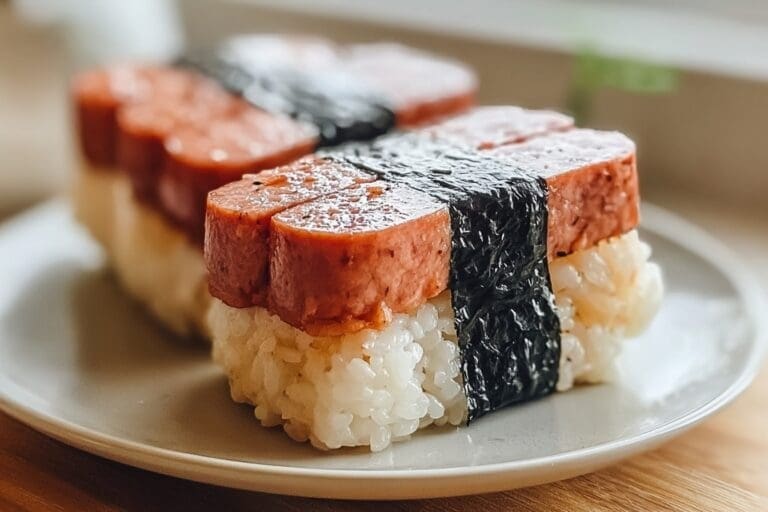
Spam Musubi
🍙🐟 Crispy grilled Spam on sticky sushi rice wrapped in nori – iconic Hawaiian snack in 30 minutes!
🌺 Sweet-savory portable bites blending umami glaze, perfect for lunches, parties or on-the-go.
- Total Time: 30 minutes
- Yield: 8-10 musubi
Ingredients
– 12 ounces canned luncheon meat (regular or lite)
– 1/4 cup oyster sauce
– 1/4 cup soy sauce
– 1/2 cup sugar
– Nori roasted seaweed
– 6 cups cooked sushi rice, without vinegar mixture
– Furikake seasoning (optional)
Instructions
1-Slice canned luncheon meat: Slice canned luncheon meat into 8-10 slices, then place them in a resealable bag.
2-Marinate for flavor: Mix oyster sauce, soy sauce, and sugar until the sugar dissolves. Add this mixture to the canned luncheon meat and marinate for 15 minutes.
3-Pan-fry to crisp: Drain the marinade, then pan-fry the canned luncheon meat on medium heat until slightly crispy on both sides.
4-Set up your nori and mold: Lay a strip of nori shiny side down on a cutting board and position a musubi mold on top.
5-Press the sushi rice: Press sushi rice firmly into the mold to about 1 to 1 1/2 inches. Dip your fingers and the mold in water to prevent sticking.
6-Add furikake (optional): Sprinkle furikake over the rice if you like extra seaweed sesame flavor.
7-Top with Spam: Remove the mold, then place a slice of cooked canned luncheon meat on top of the rice.
8-Wrap and seal: Wrap nori around the canned luncheon meat and rice like a package. Use water on the edges to seal.
9-Serve warm: Serve warm for best texture and flavor.
Last Step:
Please leave a rating and comment letting us know how you liked this recipe! This helps our business to thrive and continue providing free, high-quality recipes for you.Notes
🍚 Sushi rice essential – holds shape better than regular rice.
🔥 Best eaten warm; rice dries when cold.
🛠️ No mold? Clean empty Spam can, remove both ends carefully.
- Prep Time: 25 minutes
- Marinate: 15 minutes
- Cook Time: 5 minutes
- Category: Snacks
- Method: Stovetop
- Cuisine: Hawaiian
Nutrition
- Serving Size: 1 musubi
- Calories: 317 kcal
- Sugar: 13 g
- Sodium: 1210 mg
- Fat: 12 g
- Saturated Fat: 4 g
- Unsaturated Fat: 8 g
- Trans Fat: 0 g
- Carbohydrates: 43 g
- Fiber: 1 g
- Protein: 9 g
- Cholesterol: 30 mg